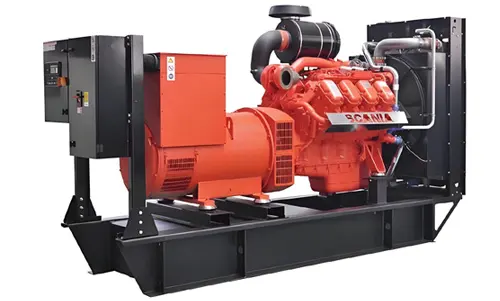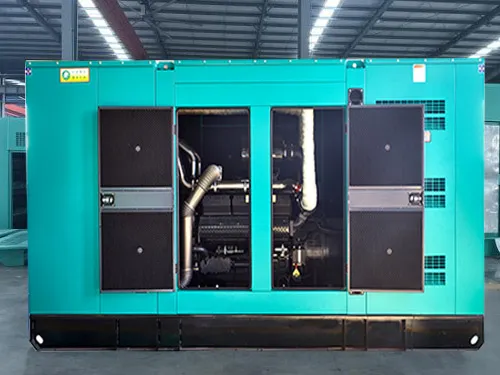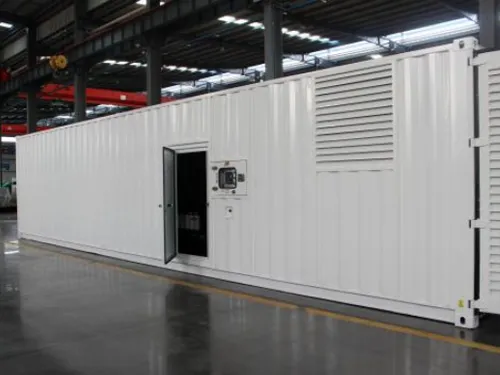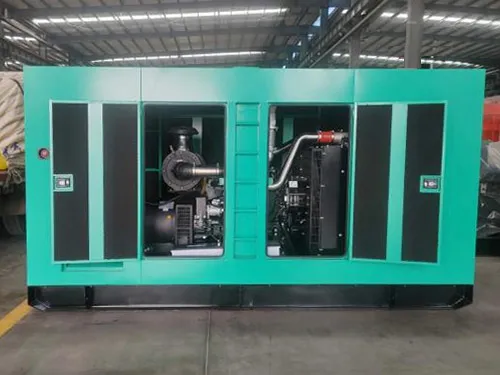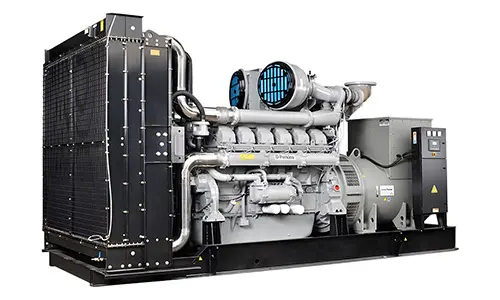

Industry data from the PowerGen 2026 Market Analysis Report indicates that power rating and fuel efficiency are the two most frequently verified parameters during diesel generator procurement, with over 78% of surveyed buyers citing these as primary evaluation criteria. This article compiles publicly available technical specifications, industry standards, and observational data to outline key considerations for selecting a diesel generator, focusing on power rating and fuel efficiency.
Global Trends in Diesel Generator Efficiency and Power Rating
Global demand for diesel generators with optimized power rating and fuel efficiency continues to grow, driven by stricter emission regulations and operational cost reduction goals. According to the International Energy Agency (IEA) 2026 energy equipment report, the market share of high - efficiency diesel generators (with fuel consumption <200 g/kWh at 50% load) is projected to increase by 18% year - over - year.
1. Regulatory Impact on Efficiency Standards
Regional emission and efficiency standards now mandate performance improvements. For example, EU Stage V - compliant generators must achieve at least 92% mechanical efficiency at rated load, as per EN 60034 - 1 standards. In North America, EPA Tier 4 regulations require generators to meet both emission and efficiency benchmarks, with fuel efficiency targets set at ≤210 g/kWh for 100 - 500 kW units.
2. Power Density Improvements
Public technical datasheets from major manufacturers (e.g., Cummins, Perkins) show that modern diesel generators achieve 15 - 20% higher power density (kW per cubic meter) compared to models from 2020. This allows more compact designs—critical for space - constrained applications like data centers or urban construction sites—without sacrificing output.
3. Market Segmentation by Efficiency
A 2026 Frost & Sullivan report reveals that generators with fuel efficiency >220 g/kWh (at 75% load) capture 62% of the industrial market, while lower - efficiency models remain prevalent in temporary construction applications.

Technical Steps to Evaluate Power Rating and Fuel Efficiency
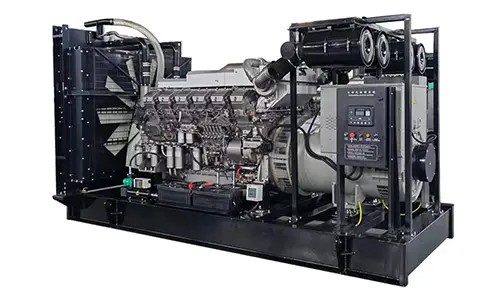
The following steps are derived from ISO 8528 - 1 and industry best practices, focusing on verifiable data and operational context.
1. Determine Actual Power Requirements
Load Analysis: Identify the total connected load (kW) and load type (resistive, inductive, or mixed). For inductive loads (e.g., motors), add a 20 - 30% safety margin to the rated power.Rating Types: Verify the generator’s prime power (continuous operation) and standby power (intermittent emergency use) ratings. Standby power (typically 10% higher than prime) is not suitable for continuous operation.
2. Verify Fuel Efficiency Data
Fuel Consumption Curves: Request fuel consumption curves from the manufacturer, focusing on 50%, 75%, and 100% load points. Efficiency is commonly expressed as g/kWh (grams of fuel per kilowatt - hour) or L/kWh (liters per kilowatt - hour).Standard Conditions: Ensure data is measured under ISO 8528 - 1 conditions (25°C, 100 kPa, 50% relative humidity) for accurate comparison. For example, a generator rated at 100 kW with a fuel consumption of 200 g/kWh at 75% load is more efficient than a 220 g/kWh model at the same load.
3. Assess Operational Conditions’ Impact
Environmental Derating: High - altitude (above 1,000 meters) or extreme temperature (below - 10°C or above 40°C) environments reduce both power output and fuel efficiency. Manufacturers provide derating factors (e.g., 10% power loss at 2,000 meters altitude, 5 - 8% efficiency decrease).Load Profile: Efficiency peaks at 75% load for most diesel generators. If your load is consistently below 30%, consider a smaller unit or a generator with variable speed technology to avoid inefficient operation.
Selection Considerations for Different Scenarios
Key factors to verify based on operational context:
Industrial/Commercial (Continuous Power):
Prioritize prime power rating, fuel efficiency at 75% load (optimal efficiency point), and compliance with local emission standards (e.g., EPA Tier 4, EU Stage V).
Residential/Backup (Intermittent Use):
Focus on standby power rating, fuel efficiency at 50% load (common for backup scenarios), and noise levels (if near occupied spaces).
A balanced evaluation of power rating and fuel efficiency ensures the generator meets operational needs while minimizing long - term costs. When selecting a diesel generator, verify these parameters against your specific load profile, environmental conditions, and budget constraints. For tailored recommendations, consult reputable manufacturers or industry experts to align technical specifications with real - world requirements.