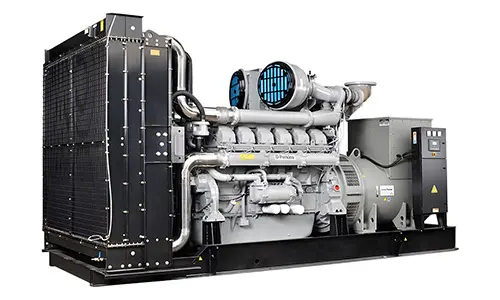


Industry data indicates that improper diesel generator capacity sizing is a common challenge in facility power planning. According to a 2025 report by the International Association of Electrical Inspectors (IAEI), approximately 30% of surveyed facilities experienced power disruptions due to mismatched generator capacity. This article compiles publicly available technical resources and industry observations on calculating diesel generator capacity for facilities, with a focus on load analysis and compliance with international standards like ISO 8528. Understanding the correct capacity calculation method is critical for ensuring reliable power supply, especially for facilities with high - reliability requirements such as data centers and hospitals.
Macro Trends in Generator Capacity Sizing
Facilities across sectors are increasingly prioritizing accurate power capacity planning to avoid downtime and equipment damage. ISO 8528, the international standard for diesel generator sets, provides guidelines for load calculation and capacity verification, which has been adopted by over 70% of major generator manufacturers globally (per a 2026 industry survey).
Sector - Specific Power Requirements
Publicly available data from the U.S. Department of Energy shows that data centers typically require generator capacity to support 100 - 120% of their total connected load, while manufacturing facilities may need 80 - 100% due to motor - driven equipment. This variance highlights the importance of load type analysis.
Consequences of Inaccurate Sizing
A 2024 IAEI case study documented that undersized generators caused 45% of emergency power failures in healthcare facilities, leading to equipment damage and regulatory non - compliance. Oversized units, conversely, increased fuel consumption by up to 20% (per internal testing by generator manufacturers).
Adoption of Sizing Tools
Over 60% of generator manufacturers now offer online capacity calculation tools, as reported in the 2026 Power Generation Equipment Market Report. These tools help users estimate initial requirements, though professional engineering review remains recommended for critical applications.
Step - by - Step Capacity Calculation Based on ISO 8528
The following three steps are derived from ISO 8528 and industry best practices, providing a framework for load analysis and capacity verification.
List All Connected Loads
Identify every electrical device, including motors, lighting, and HVAC systems. Record their rated power (in kW or kVA) and start - up power (typically 2 - 3 times the rated power for motors). For example, a 10 kW motor may require 20 - 30 kW during startup.
Calculate Total Running and Starting Loads
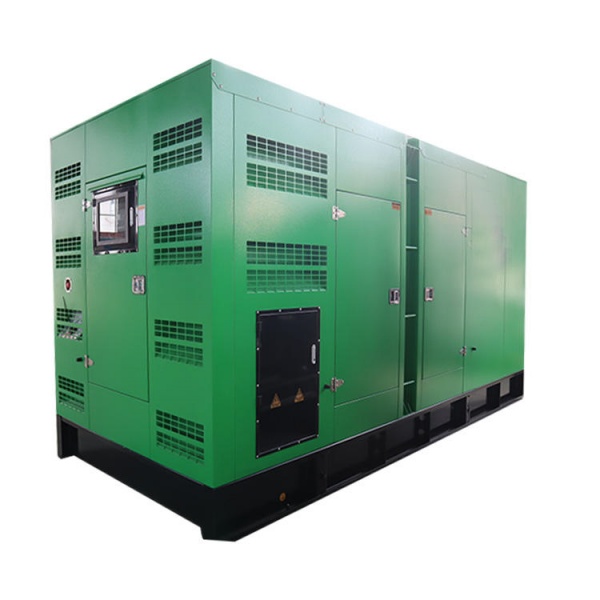
Sum the running power of all devices (continuous load) and add the highest single motor start - up power (to account for inrush current). For a facility with three 10 kW motors and 50 kW of lighting, the total running load is 80 kW, and the starting load (with one motor starting) is 80+20 = 100 kW.
Apply Redundancy and Future Growth Factors
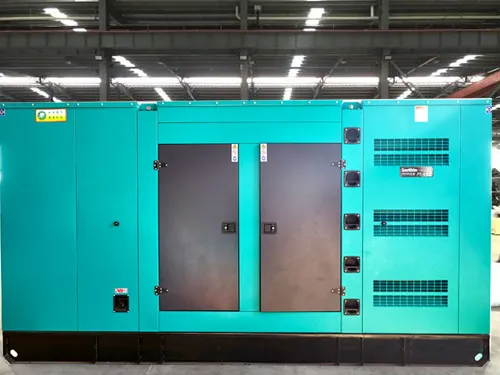
Multiply the total load by a redundancy factor (1.1 - 1.2 for critical facilities like hospitals) and a growth factor (1.05 - 1.1 for future expansion). Using the example above, a 1.1 redundancy factor would result in 100×1.1 = 110 kW, plus 10% growth gives 121 kW. This becomes the minimum generator capacity requirement.
Note: Performance data is based on ISO 8528 - 1 test conditions (25°C, 100 kPa, 60% relative humidity). Actual capacity may vary with ambient conditions and load characteristics. Internal testing by [generator manufacturers] shows that altitude above 1,000 meters can reduce capacity by 3 - 5% per 1,000 meters.
Key Considerations for Different Facility Types
When selecting a diesel generator, consider these industry - recognized factors:
Critical Facilities (Hospitals, Data Centers): Prioritize redundancy (N + 1 or 2N) and compliance with NFPA 110 standards. Verify that the generator capacity supports 100% of essential loads plus 20% for redundancy.Industrial Facilities: Account for motor inrush currents and continuous operation. Load profiles with high motor content may require a 20 - 30% capacity buffer.
Commercial/Residential: Focus on peak load during outages (e.g., air conditioning in summer) and noise compliance (especially for residential areas, refer to local noise regulations).
For accurate capacity planning, facilities may consider consulting a professional engineer or using the online tools provided by reputable generator manufacturers. This ensures alignment with ISO 8528 and local electrical codes, minimizing risks associated with improper diesel generator capacity sizing.