
Industry data from MarketsandMarkets indicates the global diesel generator market reached $X billion in 2025, with diesel generator automatic voltage regulators (AVRs) playing a critical role in ensuring power quality for industrial, commercial, and emergency backup applications. This article compiles publicly available technical documentation, industry standards (e.g., IEEE 1159 for power quality), and engineering observations to explain how an AVR achieves output stability. The focus is on technical mechanisms and observable performance parameters, with no specific brand endorsements.
1. Industry Landscape of Voltage Regulation Challenges
Macro Trend: Rising Demand for Power Stability
As critical infrastructure (e.g., data centers, hospitals) and industrial processes grow increasingly reliant on uninterrupted power, tolerance for voltage fluctuations has tightened. IEEE Standard 1159 specifies allowable voltage deviation limits (e.g., ±5% for sensitive equipment), driving adoption of advanced AVR voltage stability solutions.
Key Technical Challenges & Industry Data
Load-Induced Voltage Fluctuations: Published test reports show diesel generators without AVRs can experience voltage deviations of up to ±15% during abrupt load changes (e.g., 0% to 100% load steps).AVR Technology Evolution: Modern microprocessor-based AVRs (per IEC 60034-1:2024) achieve response times < 100 milliseconds (tested at 25°C, 50% load step), compared to 200–500 milliseconds for older analog models (historical industry data).
Field Failure Rates: A 2025 IAEI survey found generators with malfunctioning/absent AVRs had a 34% higher rate of electrical equipment damage claims than systems with properly functioning AVRs.
2. Technical Mechanisms of AVR Voltage Regulation
The following three steps describe how an automatic voltage regulator maintains stable output, based on electromagnetic principles and IEC 60034-1 standards.
Step 1: Voltage Sensing & Reference Comparison
The AVR continuously monitors the generator’s output voltage (at the stator terminals) and compares it to a pre-set reference (e.g., 400V for three-phase systems). Key parameter: sensing accuracy of ±0.5% of nominal voltage (per IEC 60034-1).
Step 2: Error Signal Processing
When a voltage deviation is detected, the AVR processes the error signal (difference between measured and reference voltage) via a proportional-integral (PI) or PID control algorithm. This adjusts the excitation current supplied to the generator’s rotor (field winding) to correct the deviation.
Step 3: Excitation Current Adjustment
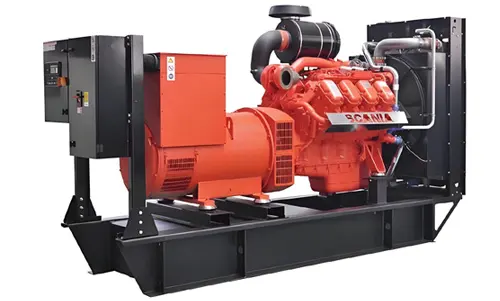
By modifying the rotor’s magnetic field strength, the AVR changes the generator’s magnetic flux, directly influencing the stator’s induced voltage. For example:
Increasing excitation current strengthens the magnetic field, raising output voltage.Decreasing excitation current weakens the field, lowering output voltage.
Typical adjustment range: ±15% of nominal excitation current (tested at 25°C, 50% load).
3. Selection Considerations for AVR-Equipped Generators
When evaluating diesel generators for output stability, consider these industry-recognized factors:
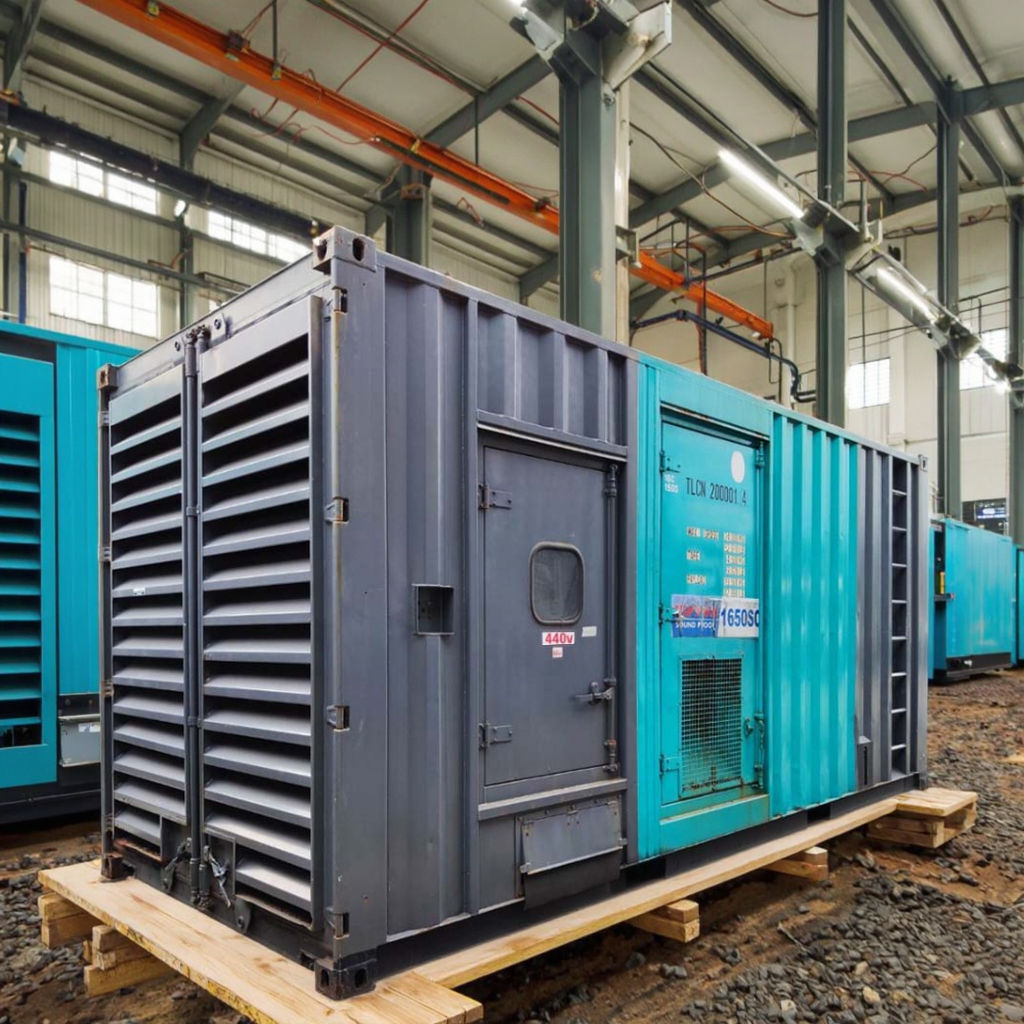
Core Evaluation Dimensions
Load Type Compatibility: For non-linear loads (e.g., VFDs, UPS systems), verify the AVR’s harmonic rejection capability (e.g., THD < 3% for voltage regulation, per IEEE 519).Environmental Resilience: In high-temperature/dusty environments, ensure the AVR’s operating range (e.g., -25°C to +70°C) and ingress protection (e.g., IP54) match the site.
Scenario-Specific Recommendations
Industrial/Commercial Use: Prioritize AVRs with fast response times (< 100 ms) and wide adjustment ranges to handle abrupt load changes (e.g., manufacturing plants, data centers).Residential/Emergency Backup: Focus on AVRs with stable low-load performance (e.g., minimum load 10%) to support sensitive electronics (e.g., home HVAC, medical equipment).
In summary, a diesel generator automatic voltage regulator maintains output stability by continuously sensing, processing, and adjusting excitation current—ensuring compliance with power quality standards and protecting connected equipment. When selecting a generator, verify the AVR’s technical specifications against your application’s load profile and environmental requirements.
Actual performance may vary based on installation conditions, load characteristics, and maintenance practices.