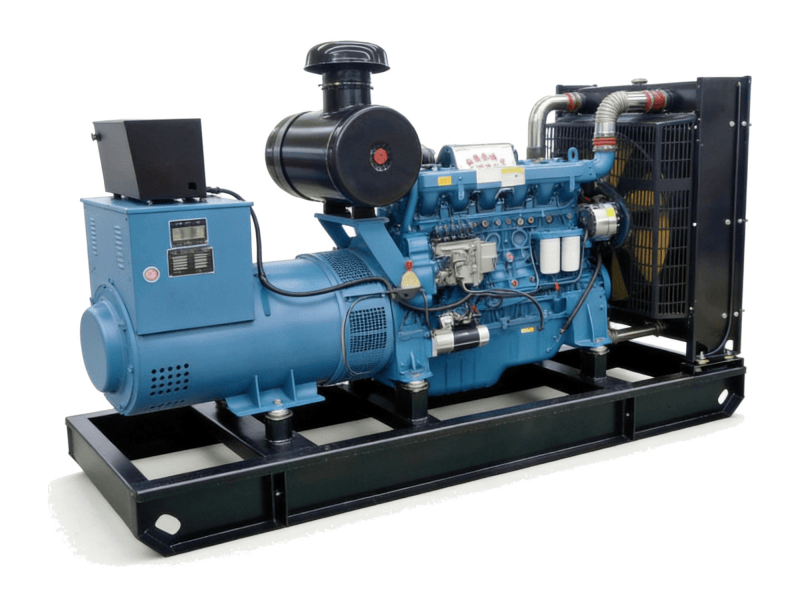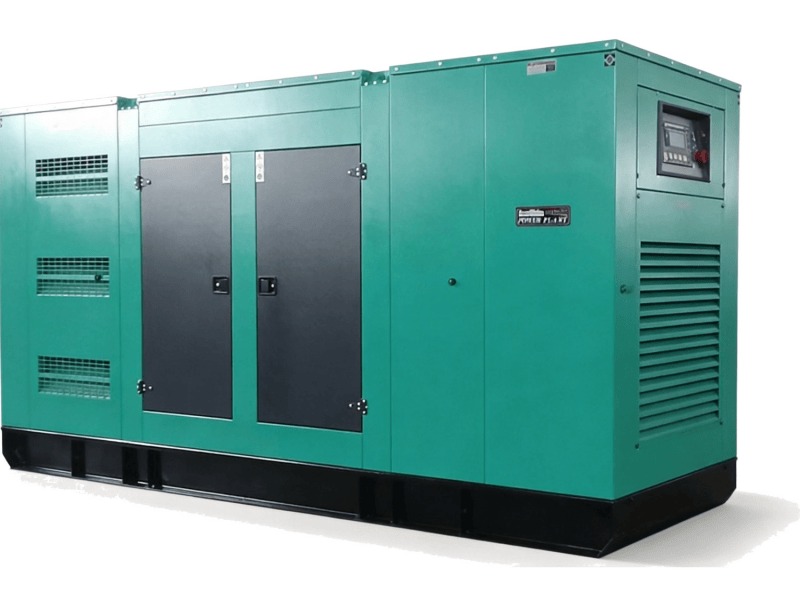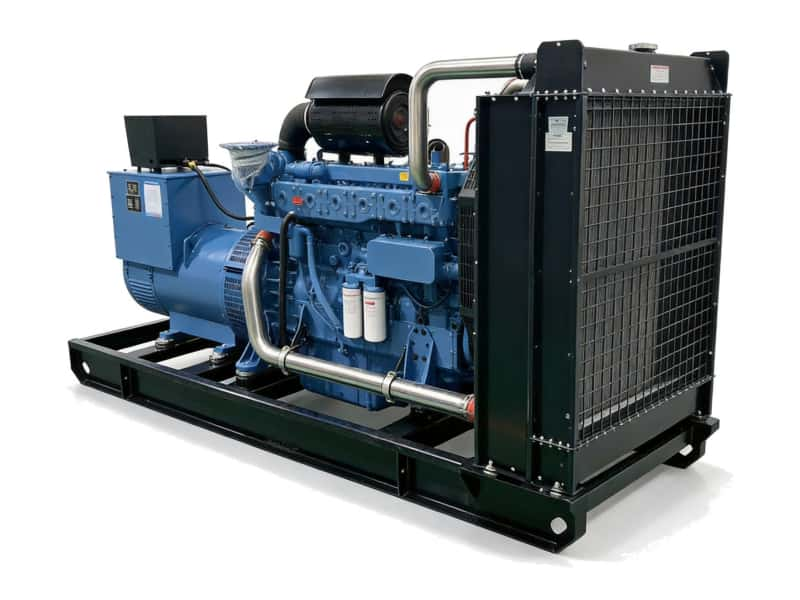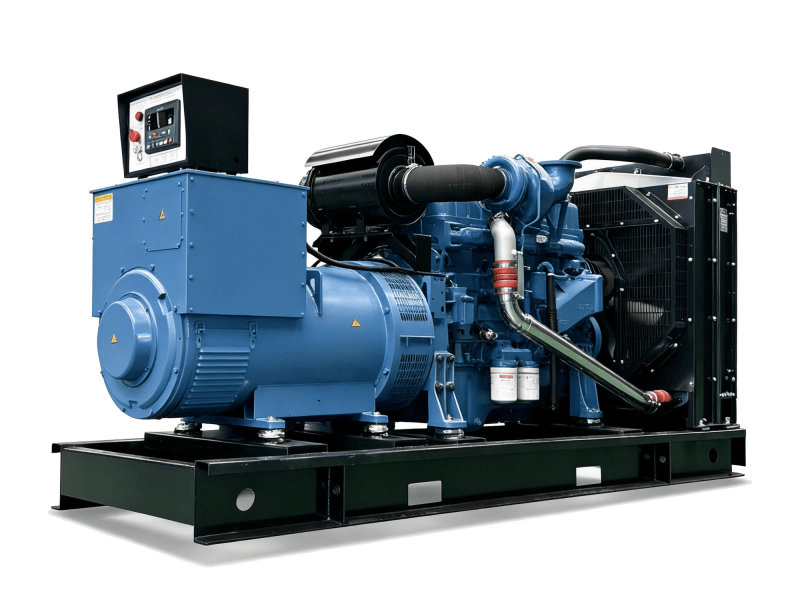

A common practice when configuring diesel generator sets for hospitals is to calculate a total capacity and provide one generator set to carry all emergency loads. This approach does not hold up under the standards. Different areas within a hospital have tolerances for power outages that differ by several orders of magnitude: operating rooms require restoration within 0.5 seconds, ordinary patient wards can wait a dozen or so seconds, and laboratory refrigerators must be able to hold out for 24 hours. Mixing these requirements into a single set of equipment usually means money is spent, yet the most critical areas still fail to meet the standard.
What Scale of Hospitals Is Jiangxi Building?
First, the background.
In February 2026, Jiangxi Province mentioned in its report on the implementation of the national economic and social development plan that seven national regional medical centers in the province had basically been completed (Source: Jiangxi Provincial People's Government website, February 6, 2026).
Specific projects include the following. The second phase of the Jiangxi Hospital of the First Affiliated Hospital of Zhejiang University School of Medicine broke ground in August 2026 in the Jiulong Lake area of Honggutan, Nanchang, with a total investment of 586 million yuan, a total construction area of 85,874.41 square meters, and a planned 400 oncology specialty beds; combined with Phase I, the total bed scale reaches 1,200, with completion and operation expected in 2028. The second phase of the Jiangxi Hospital of Children's Hospital of Chongqing Medical University was opened on January 27, 2026, with a total construction area of 177,500 square meters and 1,000 authorized beds. The Jiangxi Hospital of Longhua Hospital Affiliated to Shanghai University of Traditional Chinese Medicine has a total investment of approximately 1.6 billion yuan, with 1,000 planned beds and a total construction area of 180,000 square meters.
What these hospitals have in common is large individual scale, comprehensive departments, and dense high-end equipment. Operating rooms, ICUs, catheterization laboratories, radiotherapy centers, and laboratory assembly lines—each category has different power supply requirements. If the backup power scheme is designed around "one total capacity," it is very difficult to satisfy all of them simultaneously.
Standards First Classify Hospital Loads
The current basis is JGJ 312—2013, Code for Electrical Design of Medical Buildings. Article 4.2.1 of this code divides electrical loads in medical buildings into three levels, with the most critical being "especially important loads among Class I loads."
The code is very specific about which areas this level includes: equipment and lighting involving patient life safety in emergency resuscitation rooms, clean rooms of hematology wards, delivery rooms, burn wards, intensive care units, premature infant rooms, hemodialysis rooms, operating rooms, preoperative preparation rooms, post-anesthesia recovery rooms, anesthesia rooms, cardiovascular angiography examination rooms, and similar areas; large biochemical instruments; and ventilation systems in severe respiratory infection areas.
The criterion is not "whether this department is important," but "whether a power outage would directly endanger the patient's life." Surgical shadowless lamps, anesthesia machines, and cardiopulmonary bypass machines in operating rooms fall into this category; ward lighting and receptacles do not.
There is also a companion standard, GB 51039—2014, Code for Design of General Hospitals, which completed a partial revision in 2024 and took effect on February 1, 2025, with the standard name changed to Standard for Design of General Hospitals (Source: Announcement No. 175 of 2024 of the Ministry of Housing and Urban-Rural Development). Section 8.1 of this standard classifies medical locations into Group 0, Group 1, and Group 2 according to electrical safety protection requirements. Group 2 locations refer to locations where the contact parts of medical electrical equipment need to contact the patient's body (heart or near-heart areas), and where power interruption endangers the patient's life.
Reading the two standards together, the design logic for hospital backup power becomes clear: it is not configured by building area, but by location category.
15 Seconds: The Hard Target for Diesel Generator Sets
Article 4.4.5 of JGJ 312 sets clear requirements for diesel generator sets: they should be equipped with automatic voltage adjustment devices, fast self-starting devices, and automatic power transfer devices; when the normal power supply is interrupted, they should start automatically and supply power to the specified loads within 15 seconds; when the normal power supply is restored, they should transfer with a delay and shut down.
The figure of 15 seconds is the primary threshold for generator set selection in hospital projects. It covers the entire process of generator set starting, voltage build-up, ATS transfer, and loading. It is normal for conventional models from diesel generator set suppliers to achieve 10 to 15 seconds, but if the generator room conditions are poor, the fuel system responds slowly, or low-temperature starting is difficult in winter, the time limit may be exceeded.
Article 4.4.1 of the same code also stipulates: tertiary hospitals should be equipped with emergency diesel generator sets, and secondary hospitals are advised to be equipped. This answers the question of "whether to provide one"—for tertiary hospitals it is "shall," not "should."
Article 4.4.2 specifies the capacity basis: when the normal utility power supply is interrupted or fails, the backup power supply capacity should satisfy the power consumption of especially important loads among Class I loads, and should preferably satisfy the power consumption of Class I loads. Note the wording here—"should satisfy" especially important loads, "should preferably satisfy" Class I loads. These are two requirements of different strength and must not be confused when preparing a scheme.
0.5 Seconds: Diesel Generator Sets Cannot Achieve This Segment
There is an even stricter time requirement in the code.
Article 3.0.2 of JGJ 312 gives the classification of medical locations and facilities and the time required for automatic restoration of power supply, divided into three tiers: t ≤ 0.5 seconds, 0.5 seconds < t ≤ 15 seconds, and t > 15 seconds. Equipment and lighting involving life safety in Group 2 locations such as operating rooms, emergency resuscitation rooms, and ICUs fall under the first tier.
What does 0.5 seconds mean? At the instant the utility supply is disconnected, a person's heartbeat does not stop, but once equipment such as cardiopulmonary bypass machines, anesthesia machines, and monitors loses power and restarts, the patient on the operating table bears the risk. Restoration within 0.5 seconds cannot be achieved by diesel generator sets—even the fastest generator set takes several seconds from standstill to carrying load.
Therefore, Article 4.4.6 stipulates: for especially important loads among Class I loads that require an interruption time of less than or equal to 0.5 seconds, an uninterruptible power supply (UPS) should be provided, preferably an online type.
This forms the basic architecture of hospital backup power: UPS handles the within-0.5-second segment, and the diesel generator set handles the within-15-second segment; the two work in relay. The UPS battery capacity is determined by "holding out until the generator set takes over," and the generator set capacity is determined by "taking over all especially important loads."
A common mistake is providing only a diesel generator set without a UPS, or providing a UPS only for the IT server room. If operating rooms and ICUs do not have UPS protection, equipment will restart the moment utility power is lost, and no matter how fast the diesel generator set is, it will not be fast enough.
3 Hours and 24 Hours: Two Different Sustainment Times
Power restoration time addresses "how fast," but there is also the question of "how long."
Article 3.0.3 of JGJ 312 stipulates: when the required power restoration time is less than or equal to 0.5 seconds, the backup power supply sustainment time should not be less than 3 hours; for other backup power supplies, the sustainment time should preferably not be less than 24 hours.
These two clauses correspond to different equipment. The UPS battery must be able to hold out for 3 hours, to cover extreme situations such as "utility interruption, generator set start failure, and need for manual intervention." The diesel generator set's fuel reserve must be able to last 24 hours, to cover prolonged power outages.
The fuel reserve requirements are further refined in Article 4.4.5: the fuel supply time for tertiary hospitals should be greater than 24 hours, for secondary hospitals preferably greater than 12 hours, and for hospitals below the secondary level preferably greater than 3 hours.
This tiered requirement is often simplified in actual projects to "just provide a day tank." A day tank is usually designed for about 8 hours, which cannot meet the 24-hour requirement for tertiary hospitals. A compliant approach is a day tank plus a storage tank, with the storage tank capacity calculated for continuous operation of 24 hours or more, and the refueling access must be considered—whether a fuel tanker can drive in during a power outage. This path must be thought through in advance.
Generator Room Location Also Has Constraints
Article 4.4.4 of JGJ 312 stipulates: the diesel generator room should preferably not be adjacent to diagnostic and treatment equipment rooms, inpatient departments, electronic information system rooms, and similar areas. When adjacent due to site constraints, comprehensive measures such as generator set silencing and generator room sound insulation should be taken, and the environmental noise after treatment should not exceed the Class 1 standard for urban regional environmental noise, and the generator set exhaust should not affect diagnosis and treatment.
Diesel generator set suppliers usually clarify generator room conditions as a prerequisite during the selection stage, because this clause often becomes a difficulty in urban hospital projects. Hospital land is tight, and generator rooms are often placed close to the main building, with insufficient distance from inpatient departments and imaging departments. At that point, either acoustic treatment must be done or the generator room location must be adjusted.
Another easily overlooked point: the location of the generator set's intake and exhaust openings. If the exhaust outlet faces ward windows, even if noise meets the standard, exhaust gas will cause complaints. This must be aligned with the architectural discipline at the scheme stage, not coordinated after equipment arrives on site.
How Exactly Is "Separate Configuration" Done?
Returning to the title. Separate configuration does not mean providing two sets of diesel generator sets, but dividing loads into several tiers according to restoration time requirements and matching each with a different power supply form.
Tier 1: Restoration within 0.5 seconds. Equipment and lighting involving life safety in operating rooms, ICUs, emergency resuscitation rooms, and catheterization laboratories are provided with online UPS. UPS capacity is calculated according to the actual load of these areas, with 3 hours of backup time.
Tier 2: Restoration within 15 seconds. Other electrical equipment in the above areas, large biochemical instruments, ventilation systems in severe respiratory infection areas, fire protection loads, and emergency lighting are carried by the diesel generator set. Generator set capacity is calculated according to the sum of loads in this tier, with a margin reserved for motor starting surges.
Tier 3: Can wait for utility restoration. Ordinary ward lighting, outpatient clinics, offices, and air conditioning are not included in the backup power scope. If this tier is also to be protected, a separate supply can be provided, but it must not occupy the capacity of the emergency generator set.
The benefit of this division is that investment is spent where it matters most. If ordinary ward loads are included in the emergency capacity, the generator set will be significantly larger, investment will increase, and the few areas that truly need protection will not be any safer as a result.
A Practical Judgment Criterion
Jiangsu Kaichen Electric Power Equipment Co., Ltd.'s approach in hospital projects is to first request a department load table, listed separately according to the three tiers above, and then discuss capacity. The manufacturer's feedback from experience is that the most problematic area in hospital projects is not insufficient capacity, but the failure to tier loads—connecting loads with different restoration time requirements to the same bus section, with the result that the UPS cannot protect what should be protected, and the generator set is dragged down by loads that do not need protection.
Kaichen marks the generator set's start time and transient voltage regulation rate in its product documentation. The former corresponds to the 15-second line, and the latter corresponds to the voltage drop amplitude when high-power medical equipment starts—equipment such as CT scanners and linear accelerators has large starting surges, and if the generator set's transient performance is insufficient, the equipment may report faults.
Separate Configuration Because the Requirements Are Already Separate
The design of hospital backup power is essentially not about selecting equipment, but about finding a matching restoration time for each type of load. The standards have already drawn these lines: 0.5 seconds, 15 seconds, 24 hours, and 3 hours—four figures corresponding to four types of requirements.
Only after these four figures are clarified should generator set capacity and number of units be discussed; then the scheme will not go off track. Conversely, if the generator set is determined first and loads are back-calculated, the result is often that UPS must be added and circuits modified at the acceptance stage, and both cost and schedule are paid twice.
Jiangxi's current round of national regional medical center construction is concentrated in commissioning from 2026 to 2028, and equipment selection is mostly determined at the construction drawing stage. Getting load tiering right at the drawing stage costs far less than discovering at the commissioning stage that the operating room has no UPS and having to add it.