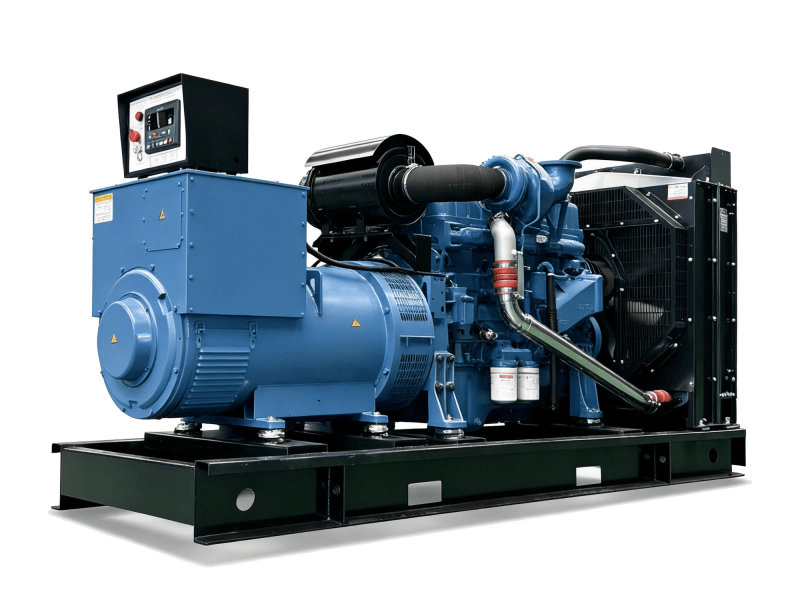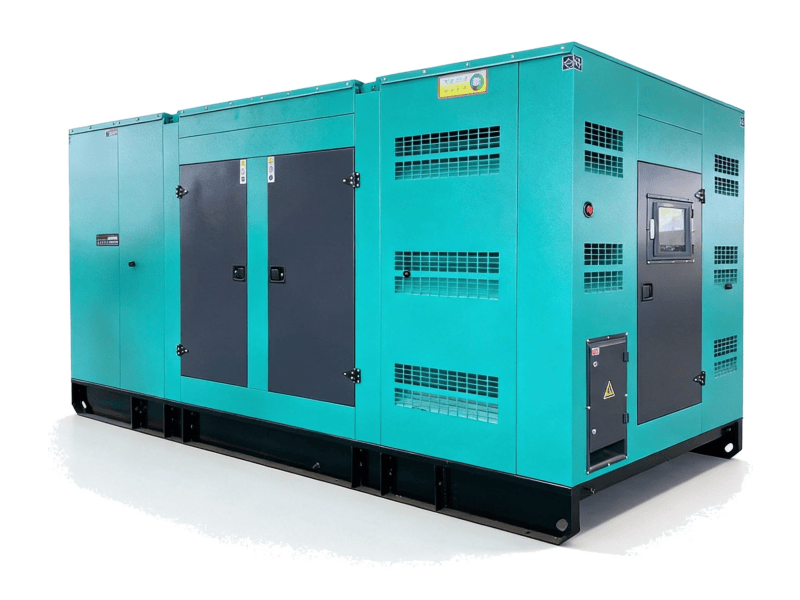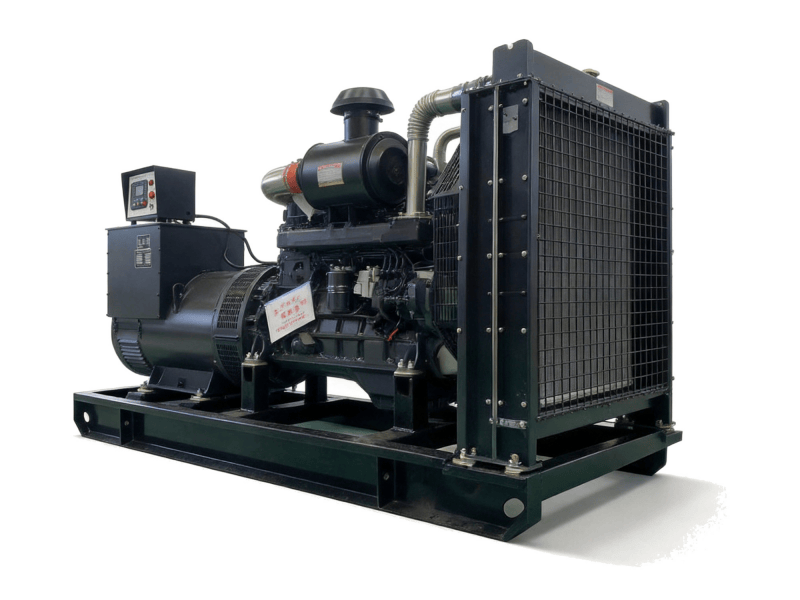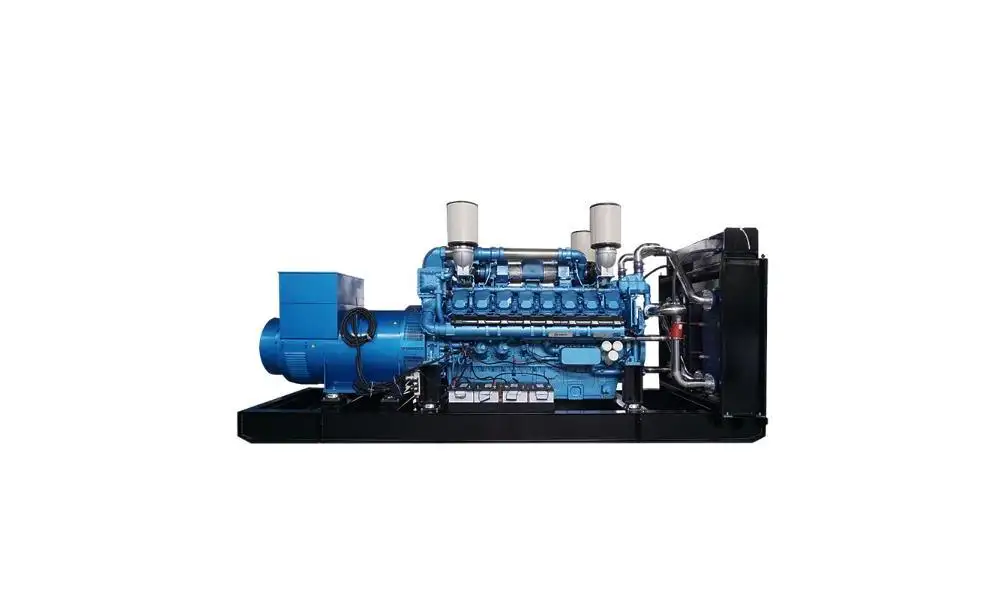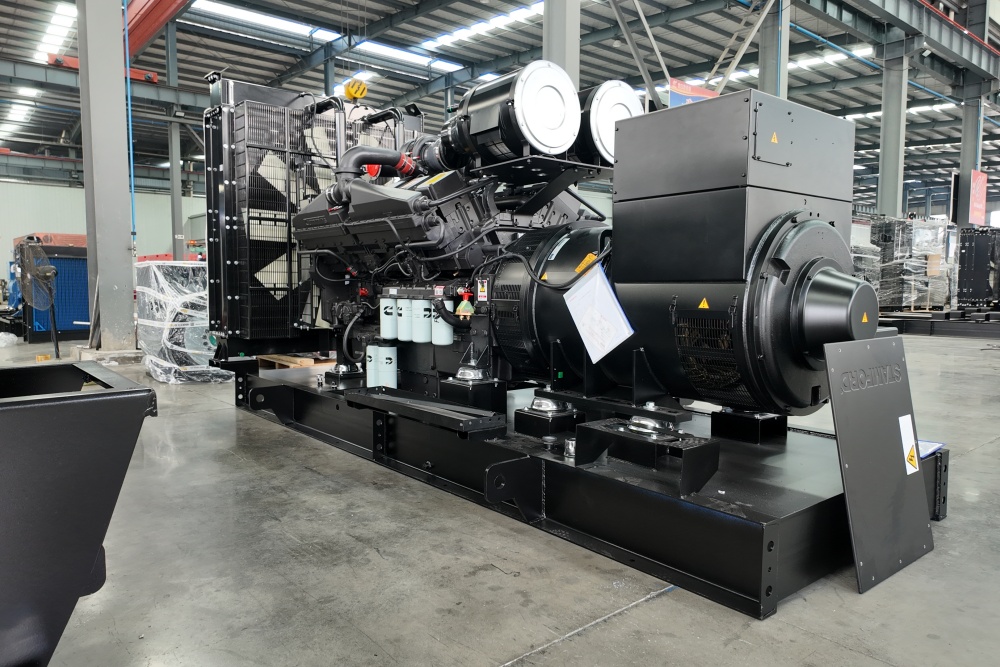

The plant room decides more 250 kW projects than the load calculation does. A generating set rated 312.5 kVA at 250 kW on a 3000 by 1150 by 1750 mm base, weighing 3000 kg, has to pass through a door, sit on a floor, breathe through a wall and be lifted into place before it can carry anything at all.
This article covers the four physical questions that decide whether a Kaichen KC-Y250 fits an existing factory building: the envelope, the air path, the exhaust route and the lifting plan, with the ratings and dimensions taken from the parameter set rather than from a site estimate.
The ratings behind a 250 kW label
Prime output is 312.5 kVA at a power factor of 0.8, which is 250 kW continuous, and standby output is 343.8 kVA, or 275 kW. The engine is a YC6MK420L-D20 six-cylinder unit of 10.34 litres, and the alternator, radiator and fuel tank are arranged inside the 3000 mm frame.
Both ratings belong in the commissioning record, because a factory that expects 275 kW from a set it bought as a 250 kW machine will load it past the standby rating during the first long outage and then wonder why the coolant temperature climbs.
A 3000 by 1150 by 1750 mm envelope in a real building
The 1150 mm width is the number that usually fails a survey. A double door of 1200 mm admits the set with 25 mm each side, which is not enough clearance to move a 3000 kg machine on rollers without damaging the frame paint or the door jamb.
Plan for a clear service side of 800 mm on the filter and injection side, and check the corridor rather than just the room. A set that fits the plant room but not the route to it is a set that gets installed through a window opening, at a cost nobody budgeted.
Air: the radiator path and the louvre area
The radiator needs an inlet and an outlet sized for the fan, and both should be permanent openings rather than doors. Recirculation is the common failure: hot air leaves the outlet, finds a nearby inlet, and the set derates in the first hour of summer operation.
Combustion air is a separate requirement from cooling air and should not be taken from inside a hot enclosure. A plant room with one louvre serving both paths is a design that works on the drawing and fails on the first warm day of the year.
Fuel storage belongs in the same survey. A 250 kW set running a full shift needs a tank sized for that run, and the tank inside a 3000 mm frame is rarely enough for a factory working two shifts. The external tank position, its bund and the fill point should all appear on the room drawing rather than be decided on site.
Exhaust and the wall penetration
The exhaust should leave the building through a dedicated penetration with a proper bellows joint and a rain cap, not through a hole cut after the fact around a flexible pipe. Back pressure is the figure to check against the engine supplier's limit, because a long horizontal run adds resistance quietly.
Insulation on the exhaust run matters for fire safety as much as for surface temperature, and the clearance to any combustible material should be stated on the installation drawing rather than left to the fitter's judgment.
Lifting 3000 kg without damaging the frame
Four lifting points on the base frame are normal at this mass, and the set should be lifted with a spreader rather than with slings that pinch the frame rails. The centre of gravity sits toward the alternator end, so an unbalanced lift tilts the machine and loads two points instead of four.
A forklift rated above the mass with the load centre accounted for will move a 3000 kg set on a flat floor; the same forklift on a slope or a ramp will not, and the difference is a dropped machine rather than a slow one.
Rigging is the part that usually gets improvised. A spreader beam, four certified slings and a crane whose radius reaches the plinth are the minimum, and the lift plan should be written before the machine arrives rather than assembled from whatever the contractor happens to have on site that morning.
Foundation, vibration and the floor beneath
A concrete plinth on an isolated slab is the usual specification, with the set on anti-vibration mounts and the exhaust decoupled from the building structure. A set bolted directly to a suspended floor transmits vibration into the slab, and the complaint usually arrives as noise in an adjacent office.
The floor should be checked against the four support points rather than the total mass, and the check is inexpensive compared with repairing a cracked slab under a running engine with a fuel tank beside it.
Commissioning on a live factory supply
Load bank testing steps the set through 20, 50, 75 and 100 per cent and records ambient, oil pressure and coolant temperature at each step. On a factory that cannot stop production, the bank is the only way to prove capacity without touching the process lines.
The readings then become the baseline for every later service. A set that has drifted 8 degrees in coolant temperature at the same load over two years is telling the maintenance team that the radiator needs cleaning, long before it shuts down.
The changeover sequence needs exercising as well. A transfer switch that has never been operated is the component most likely to fail during a real outage, and a drill with the set isolated from the mains proves the sequence without putting the production line at risk. Fifteen minutes per month is enough to keep that path proven.
Why Jiangsu Kaichen for 250 kW factory backup
Jiangsu Kaichen Power builds in Yangzhou with an annual capacity of 8000 sets and more than 20000 delivered in three years, quoting FOB Shanghai on 30 per cent deposit and the balance before shipment, with 7 to 15 working days for standard sets.
The KC-Y250 parameters used above, including the 3000 by 1150 by 1750 mm envelope and the 3000 kg mass, come from the same sheet the factory quotes from, so the room survey and the technical offer start from one set of numbers.