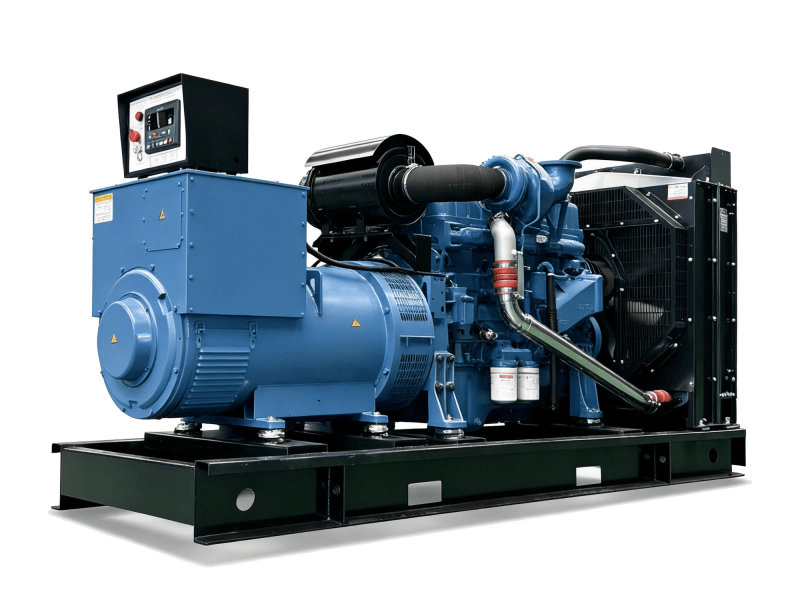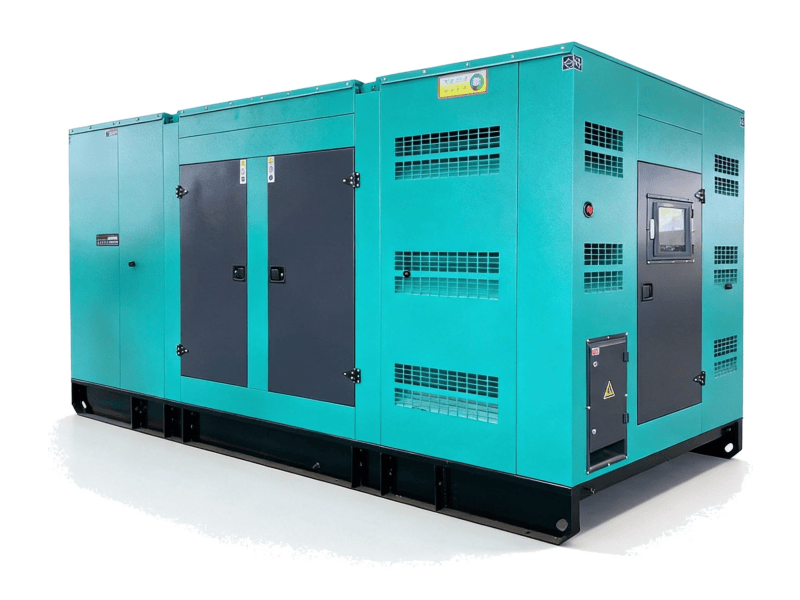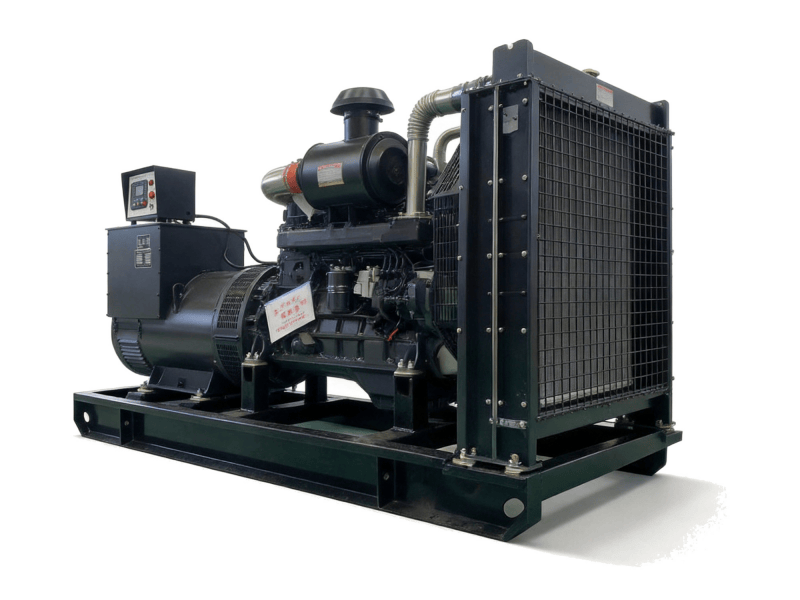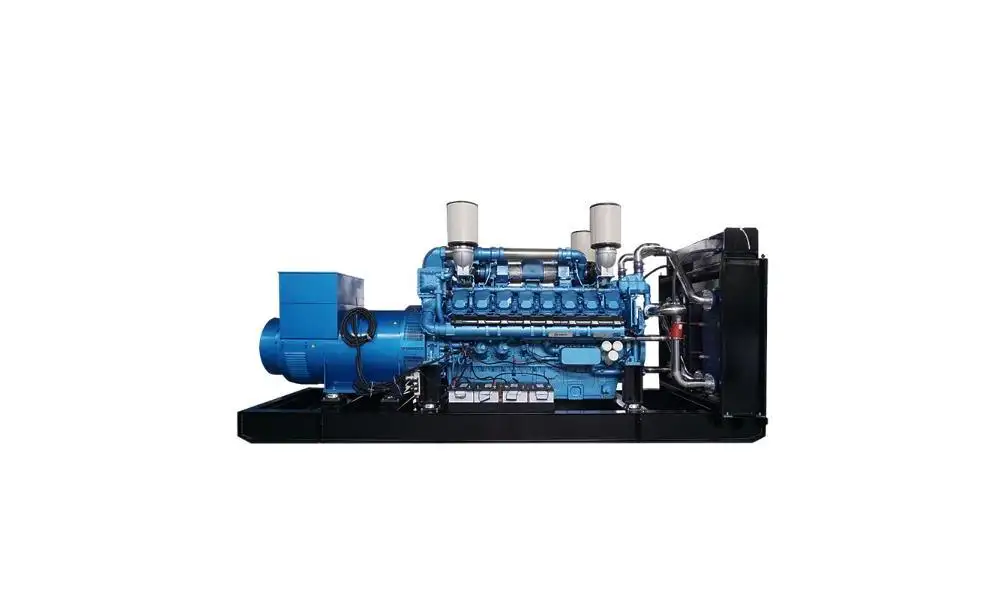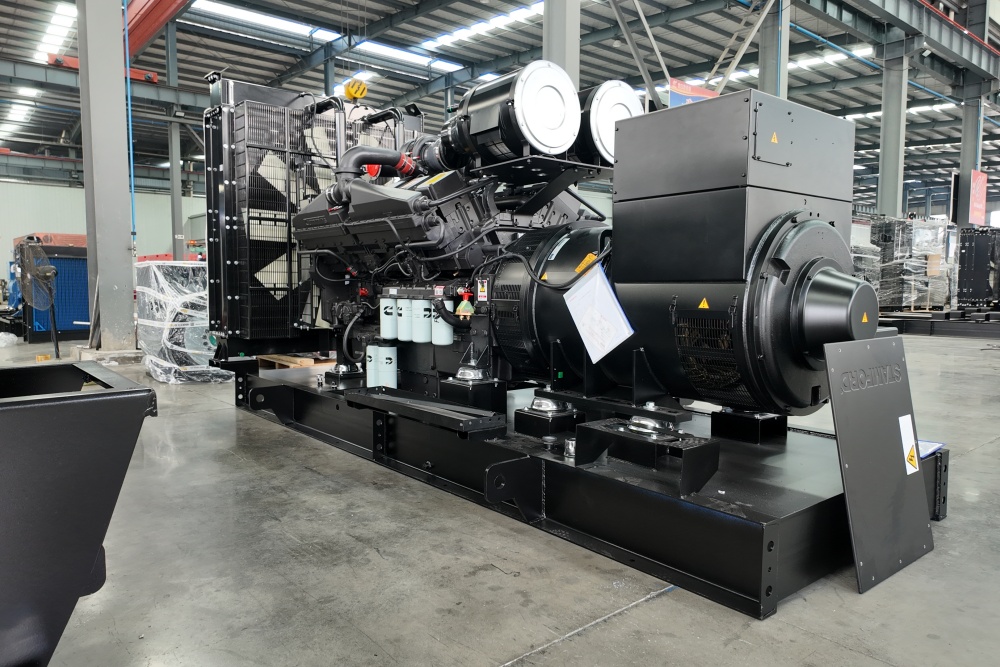

A 500 kW standby set in a hospital is a maintenance contract with an engine attached, and the twelve-cylinder machine at this rating makes that clear from the first service interval. The Kaichen KC-S500 is rated 625 kVA at 500 kW for prime duty and 687.5 kVA at 550 kW for standby, and both figures are tied to a schedule that has to be planned before the set is delivered.
This article sets out what a facility team needs to know: the ratings it will actually run against, why cylinder count changes the service plan, the clearance a 3600 by 1700 by 2100 mm enclosure needs, and how to prove capacity on a site where the load cannot be switched off for a test.
Ratings a hospital actually uses
Most hospital loads are induction motors, lifts, imaging equipment and IT rooms, so the kVA figure matters as much as the kW figure. At a power factor of 0.8 the KC-S500 delivers 625 kVA for continuous duty and 687.5 kVA for standby, and the 550 kW standby rating assumes the set runs for the hours a utility outage lasts, not for a full shift.
The distinction is worth writing into the operating procedure. A prime-rated set may run loaded without a limit on hours; a standby-rated set may not, and treating the higher number as a permanent capacity is the single most common cause of premature wear on hospital backup machines.
Why twelve cylinders change the service plan
The SC27G830D2 is a 26.6 litre twelve-cylinder engine, which means two cylinder heads, twice the injectors and twice the glow plugs to inspect, and a valve clearance check that takes longer than on a six. The work is not harder, but the parts count and the labour hours both rise.
That has a practical consequence for spares. A hospital holding one filter set for a six-cylinder machine will find itself short on a twelve, and the usual answer is a kitted spare box per engine rather than a shelf assembled from whatever the last order left behind.
Space around a 3600 by 1700 by 2100 mm enclosure
The enclosure sets the room, not the other way round. At 3600 mm long and 1700 mm wide, the set needs a clear service side of at least 800 mm for filter and injector access, and a door opening wide enough to admit the machine rather than a pallet of parts.
Height matters for maintenance as much as for transport. A 2100 mm enclosure under a 2400 mm ceiling leaves no room to lift a cylinder head, so either the room gains height or the heavy work moves outside, and that decision is much cheaper at design stage than after commissioning.
Delivery belongs to the same problem. A 4510 kg enclosure cannot be walked into a basement plant room on a pallet truck, and a passenger lift will not carry it. The route from the loading dock to the final position should be surveyed before the set is ordered, including turning radii, doorway heights and the floor strength of every section it crosses.
Air, heat and the recirculation trap
Radiator air has to enter and leave through permanent openings sized for the fan, not through a door left ajar. A plant room that pulls its combustion air from the same louvre as the radiator will recirculate hot air within minutes, and the set will derate exactly when the building needs it.
The 4510 kg mass of this enclosure also decides the floor. A raised plant deck designed for a 250 kW set will not carry a 500 kW machine without a structural check, and the check is cheap compared with a cracked slab under a running engine.
Proving capacity without switching off the hospital
A load bank is the standard answer. Stepping the set through 20, 50, 75 and 100 per cent on a resistive bank shows that it reaches its rating and that the cooling system holds it there, without touching a single clinical circuit.
The test record should include ambient temperature, oil pressure and coolant temperature at each step. Those figures become the baseline for every later comparison, and a set that drifts from them over two years is telling the facility team something well before it fails.
Fuel storage and the run-time calculation
Run time is a tank question, not an engine question. A hospital that wants eight hours of autonomy has to size the tank against the consumption curve for this specific engine at the average load it expects, and the curve should come from the supplier rather than from a rule of thumb applied across all 500 kW sets.
Day tanks and main tanks are often separated by building code, and the transfer pump becomes part of the standby system. A pump that is not on the test schedule is a pump that fails during the first long outage, which is the wrong moment to discover it.
Contract terms that protect uptime
Standard sets ship in 7 to 15 working days and container batches in 20 to 30 days on FOB Shanghai terms, 30 per cent deposit and the balance before shipment. For a hospital project the delivery date matters less than the commissioning support that follows it, so the scope should name who performs the first load test on site.
A spare parts list agreed at order stage, covering filters, belts and the sensors that actually stop a set, is worth more than a discount on the machine. Sensors fail more often than engines, and a hospital without a speed sensor in stock is a hospital waiting on a courier.
The commissioning window is worth naming in the same contract. A hospital that schedules the first load test on a weekday interrupts clinics, while a weekend window with the load bank on site needs planning, and the supplier's engineer should be booked at the same time as the container rather than after arrival.
Why Jiangsu Kaichen for 500 kW hospital backup
Jiangsu Kaichen Power builds in Yangzhou, quotes FOB Shanghai and Nanjing, and holds ISO 9001, ISO 14001 and ISO 45001 certification along with a CE declaration for the machinery directive. Annual capacity is 8000 sets, with more than 20000 delivered in the past three years.
Soundproof enclosures at this rating are specified to 72 dB(A) at 7 m, which is the figure a hospital plant room has to meet at the boundary, and the four-stage load test with video record is issued with each set rather than on request.