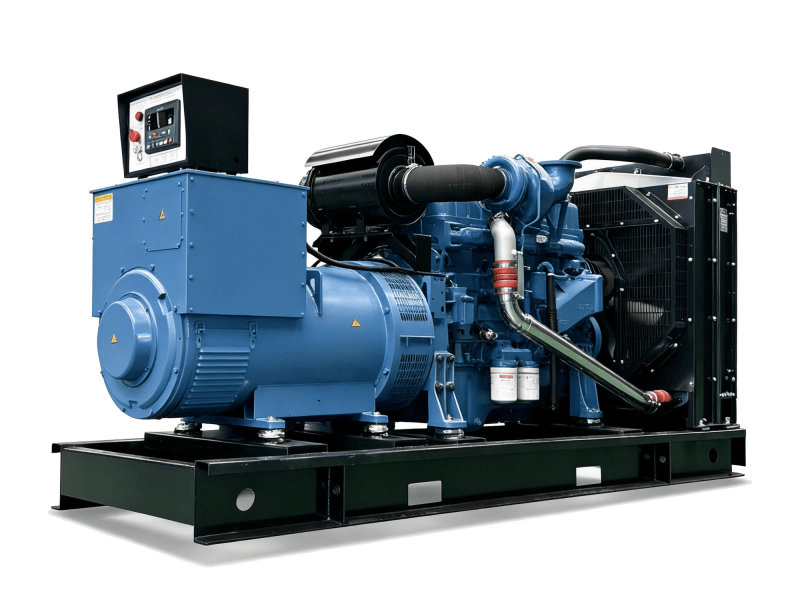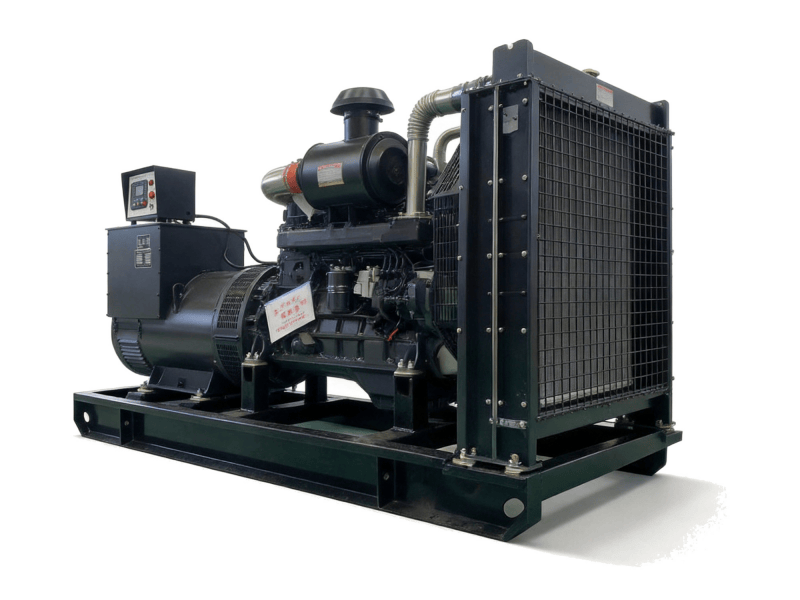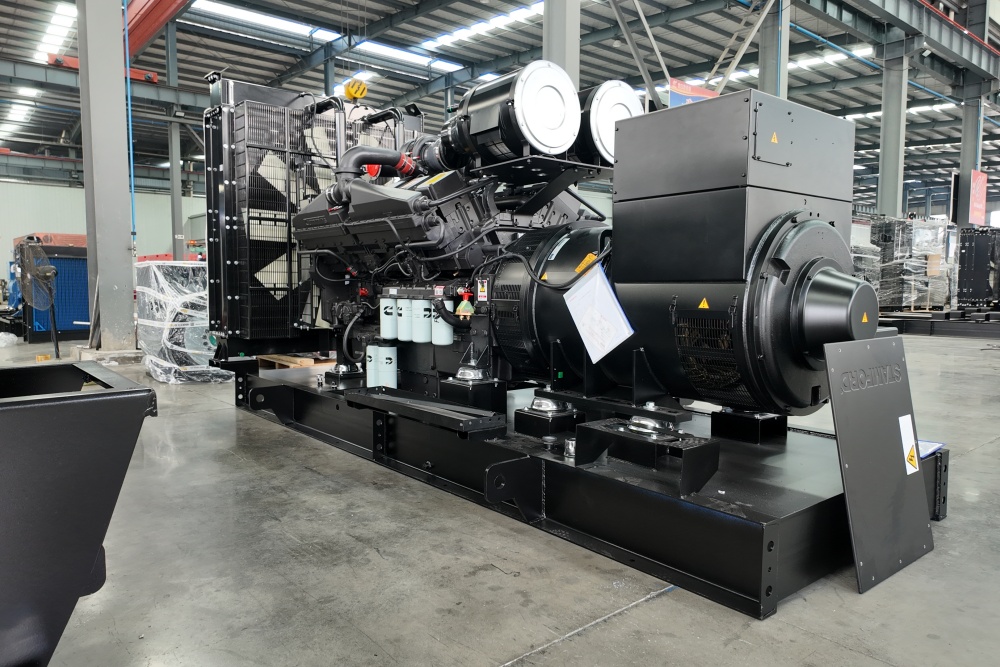

Two generating sets rated within 50 kW of each other can differ by a tonne and a half and by 750 mm of length, and that difference decides which one fits the plant room. The Kaichen KC-W400 is rated 500 kVA at 400 kW on a six-cylinder 12.54 litre engine and measures 4300 by 1500 by 2000 mm at 5200 kg; the KC-D450 is rated 562.5 kVA at 450 kW on a twelve-cylinder 26.6 litre engine and measures 3550 by 1500 by 2000 mm at 3700 kg.
The comparison is worth making properly, because most buyers start from the power figure and then discover that the heavier, longer machine is the smaller-rated one. This article sets out what the parameter sheet says, where the mass goes, and which questions a tender should ask.
Read the parameter sheet, not the rating
Power tells a buyer what the set can carry; length, width, height and mass tell the buyer whether it can be delivered and serviced. At 4300 mm the KC-W400 is 750 mm longer than the KC-D450 and 1500 kg heavier, so a plant room designed around a 3.5 m footprint will not accept it without a change.
This is not a defect in either machine. It is the normal consequence of two different engine architectures, and the practical lesson is that the room, the corridor and the crane position should be checked against the parameter sheet before the power rating is agreed.
Six cylinders: fewer service points, a longer block
A 12.54 litre six-cylinder engine has one cylinder head, six injectors and a single valve cover to open, which shortens routine service and simplifies the spare parts list. The trade is a longer engine block and a longer enclosure to house the same alternator and radiator.
For a factory that maintains its own equipment this usually favours the six. Fewer parts on the shelf, fewer points to torque, and a service that one technician can finish inside a shift rather than handing over to the next.
Troubleshooting is the other difference worth weighing. A twelve-cylinder engine has two banks to balance and a longer injector sequence to diagnose, so a misfire takes longer to locate; a six narrows the search to six points and one rail. On a site without diagnostic software that gap alone can halve the time to a running machine again.
Twelve cylinders: shorter package, more parts
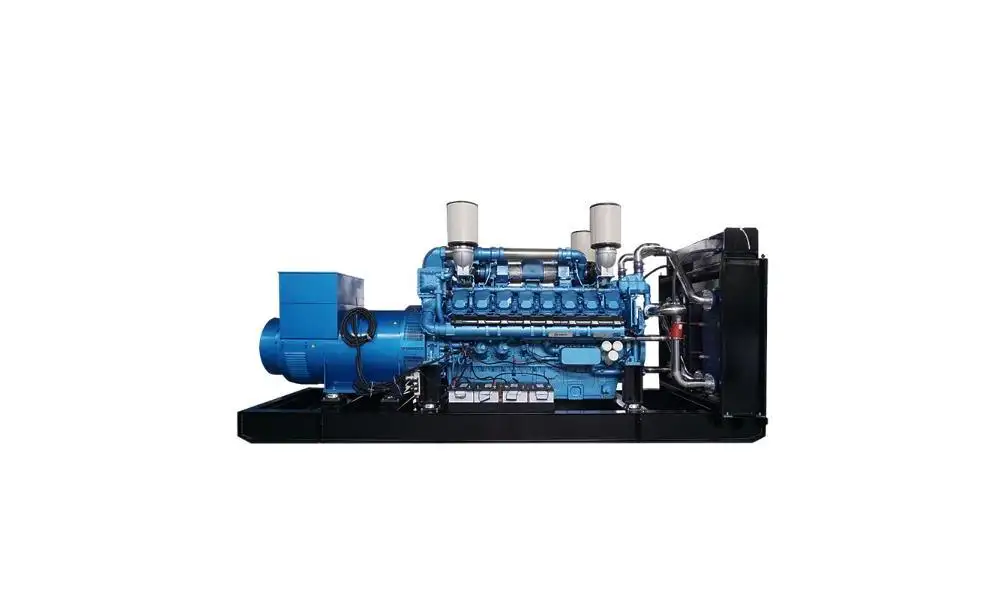
The 26.6 litre twelve-cylinder unit produces its rating with more, smaller cylinders, so the block is shorter for the power it delivers and the enclosure shrinks with it. The parts count roughly doubles, and valve clearance work takes longer because there are twice as many to check.
Sites that value a compact footprint, or that buy maintenance as a service rather than performing it, often accept that trade. The shorter package can be the difference between fitting an existing plant room and building a new one.
Where the 1500 kg actually goes
The extra mass on the six-cylinder set is carried by a heavier block, a larger cooling package and a longer base frame, and it changes the handling plan rather than the electrical performance. A 5200 kg set needs a forklift of adequate capacity at both ends of the journey, not just at the factory.
Point loading on a raised floor should be checked against the base frame footprint rather than the total mass, because the load concentrates at the frame rails. A structural engineer can work from the four support points, which the supplier should provide as a drawing.
Transport arrangement follows the same logic. A 4300 mm set on a flatbed leaves little room for a second unit, and a 40HQ carries fewer of these than of the shorter twelve-cylinder machine, so freight per kilowatt is not identical even where the FOB prices look close on paper.
Fuel burn and tank sizing
Specific consumption figures are quoted per engine family, and a 12.54 litre six and a 26.6 litre twelve do not share a curve even when their ratings are close. The tank should be sized against the consumption at the average load the site expects, taken from the supplier's data for that engine.
A set that runs at 40 per cent load most of the time burns disproportionately more per kilowatt-hour than one that runs near 75 per cent, and tank sizing based on full-load figures alone is the reason some sites run dry during a long outage.
Acoustic treatment and enclosure geometry
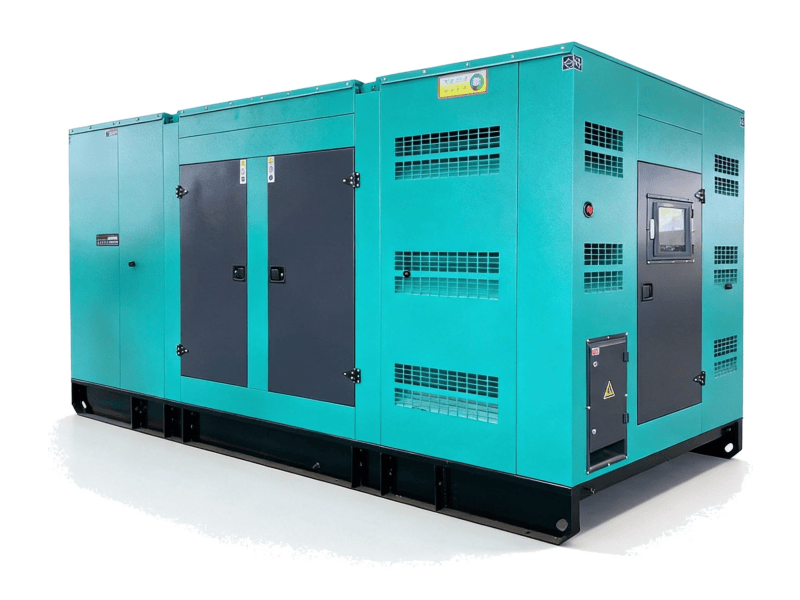
Enclosure attenuation depends on surface area and on the path the air takes, so a longer enclosure has more wall to line and a longer intake path to work with. The 4300 mm machine can often reach a lower noise figure with less internal baffling than a shorter one.
What matters for the specification is the figure at the boundary, measured at 7 m, rather than the number printed on a canopy. Soundproof sets in this range are specified to 72 dB(A) at 7 m, and a site with a tighter limit needs that stated as a project requirement.
Cooling is the second-order effect of cylinder count. A longer block usually carries a larger radiator and needs a longer air path through the enclosure, so two enclosures should be compared on louvre area and fan duty rather than on overall length, which is the figure catalogues display most prominently.
Five items a tender should compare
Compare the footprint, the mass, the cylinder count, the service access side and the noise figure at 7 m. Those five numbers decide installation cost more often than the price of the set, and they are all available before the order rather than after delivery.
Then compare the rating basis. A 400 kW prime rating and a 450 kW standby rating are not interchangeable capacities, and a tender that lists both without the ambient and altitude at which they apply is comparing two different things.
Why Jiangsu Kaichen for 400 kW orders
Jiangsu Kaichen Power builds both layouts in Yangzhou, so a buyer can compare a Weichai six-cylinder set and a twelve-cylinder set from one supplier rather than from two quotations with different assumptions. Annual capacity is 8000 sets, with more than 20000 delivered in three years.
Terms are FOB Shanghai or Nanjing, 30 per cent deposit and the balance before shipment, with 7 to 15 working days for standard sets. Four-stage load testing at 20, 50, 75 and 100 per cent is recorded on video and issued with each machine.