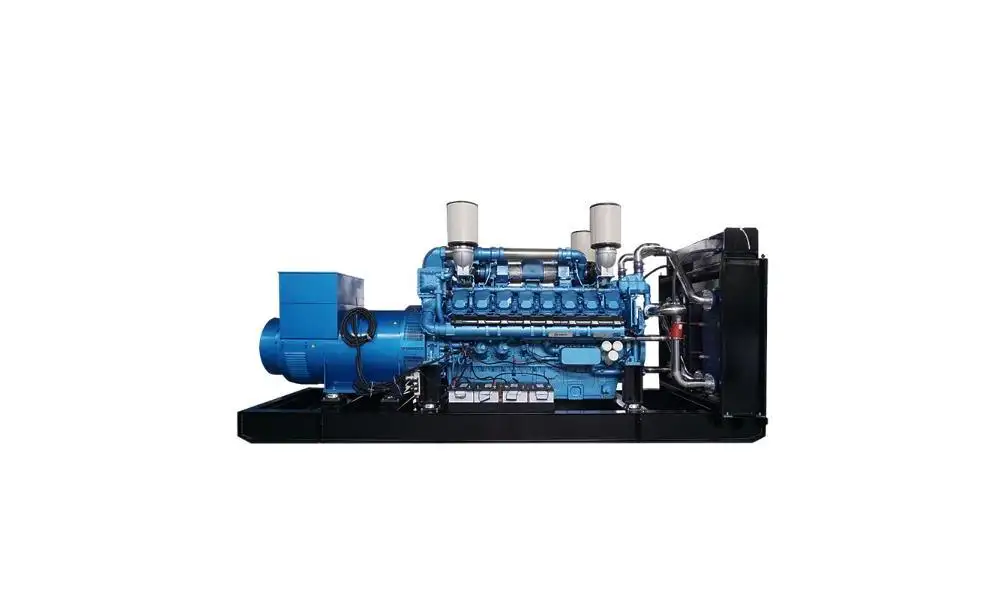

When configuring a diesel generator set for cold storage, many people ask first, "How much power is needed?" This reverses the order. The special nature of cold storage is that after a power outage, problems do not appear immediately—the facility approaches the critical point hour by hour. How long it can hold out determines how large the generator set must be, how fast it must start, and how many units are needed. Calculate the window first, then calculate the power; only then can the configuration be accurate.
Compliance First: Cold Storage Rooms Must Operate 24/7 with Emergency Measures
Let us start with the basis. Article 6.5 of the National Food Safety Standard GB 31605—2020, Hygienic Specification for Food Cold Chain Logistics, states directly: cold storage rooms should operate continuously 24 hours a day and have emergency measures in place.
Article 6.7 of the same standard stipulates that the storage environment temperature for food requiring freezing should not be higher than −18°C, and for food requiring refrigeration should be 0°C to 10°C. Article 6.1 requires that the cold storage temperature recording interval not exceed 30 minutes. Article 6.3 stipulates that when cold storage temperature and humidity exceed the set range, corrective actions and emergency measures should be taken immediately, and the range and duration of the exceedance should be truthfully recorded.
Taken together, these clauses point clearly to one conclusion: backup power for cold storage is not a "nice to have" bonus item, but one of the implementation means for the mandatory requirement of "emergency measures." Moreover, the standard specifically emphasizes "truthfully recording the range and duration of exceedance"—the implication is that temperature exceedance itself is permitted to occur within a limited range, but it must be recorded and traceable. For operators, this turns "how long can we hold out after a power outage" from a technical question into a compliance question.
The Henan provincial local standard DB41/T 2995—2025, Specification for Less-Than-Truckload Food Cold Chain Logistics Services, also makes the same provision regarding the rigid requirement that frozen food storage temperature not exceed −18°C.
Insulation Is Not Designed for "Power-Outage Endurance"
To calculate the window, one must first understand the logic behind cold storage insulation design.
Section 4.3 of GB 50072—2021, Standard for Design of Cold Storage, specifies the calculation method for warehouse insulation. The insulation thickness is calculated by formula, in which the total thermal resistance of the enclosure structure is selected from tables according to the designed indoor-outdoor temperature difference, with the corresponding heat flow per unit area roughly in the range of 6 to 11 watts per square meter.
The starting point of this design is "maintaining operating conditions": under the condition of normal refrigeration system operation, the heat transferred from outside is controlled within a range that the refrigeration capacity can offset. It pursues "energy savings in normal times and stable warehouse temperature," not "how long it can hold out after a power outage."
Thicker insulation does indeed slow temperature rise after a power outage, but this is a byproduct of the design, not the design objective. A cold storage facility designed according to the standard has insulation capacity just sufficient to maintain operating conditions, with no margin reserved for power-outage endurance. This is why, under the same set of standards, some warehouses can hold out for six hours after a power outage while others reach the critical point in two hours—the difference is not whether the insulation complies with the standard, but operational variables such as loading rate, door-opening frequency, and outdoor temperature.
The Window Is Determined by Three Variables
The rate of temperature rise in cold storage after a power outage is mainly determined by three variables. If any one changes, the window changes.
The first variable is heat leakage through the enclosure structure. The greater the temperature difference between inside and outside, the faster the heat leakage. For the same −18°C freezer warehouse, when the outdoor temperature is 35°C in summer, the temperature difference is 53°C; when the outdoor temperature is 5°C in winter, the temperature difference is 23°C—more than double the heat leakage. This is also why cold storage power-outage accidents are more concentrated in summer—not because power outages are more likely in summer, but because the consequences of a summer outage are more serious.
The second variable is the heat capacity inside the warehouse. The goods in the warehouse themselves are a huge cold reserve. In a fully loaded freezer warehouse, the sensible heat of the goods and packaging materials plus some latent heat of phase change can absorb a considerable amount of heat leakage, so the warehouse temperature rises slowly; in an empty or half-loaded warehouse, the cold reserve is small, and the temperature rises quickly. At the same −18°C, the window for a full warehouse and a half-loaded warehouse may differ by a factor of two. The operational implication is that cold storage should not operate at low loading rates for extended periods—not only an energy efficiency issue but also an emergency capability issue.
The third variable is the allowable temperature rise. The critical temperature for frozen food is −18°C, but from −18°C rising above −18°C to the point where the product actually undergoes quality change, there is still a buffer period. Article 6.3 of GB 31605—2020 allows corrective measures to be taken and recorded after temperature exceedance, indicating that the standard recognizes the actual situation of short-term temperature exceedance. The endpoint of the window should not be set at "warehouse temperature leaving the set value," but at "product core temperature approaching the critical value." The distance between these two points depends on cargo type, packaging method, and stacking density.
Only by plugging these three variables in can you obtain a window figure that is meaningful for your own warehouse. Industry sayings such as "a freezer warehouse can hold out for two to six hours after a power outage" are empirical values under specific conditions; applying them directly to another warehouse may result in an error of more than double.
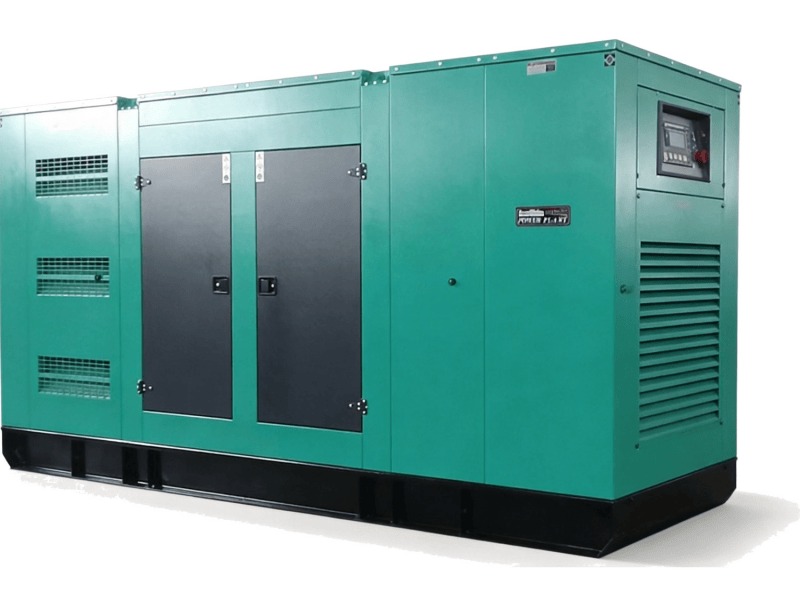
[Image: Jiangsu Kaichen Electric Power Equipment Co., Ltd. — Soundproof generator set (200–350 kW power range)]
Only After the Window Is Calculated Can You Know How to Configure the Generator Set
Once the window is known, the generator set configuration parameters have a basis. Diesel generator set suppliers usually provide four parameters in their proposals, each of which is related to the window.
Start time. For a generator set from receiving the signal to carrying load, the conventional configuration takes a dozen or so seconds. Relative to a window of several hours, this time is negligible. But if the cold storage is equipped with temperature alarm interlocking, with the alarm threshold set to trigger when the warehouse temperature rises by 1°C, then the time from alarm to generator set loading must be included. Some cold storage alarm settings are overly sensitive—before the generator set has finished starting, the alarm has already sounded three times, and the duty personnel's procedural response instead adds confusion. A reasonable approach is to align the alarm threshold with the generator set start time.
Capacity. The most common mistake here is sizing the diesel generator set according to the rated power of the refrigeration units. Refrigeration compressors are typical heavy-duty starting equipment. The starting current of piston compressors can reach 5 to 7 times the rated current, while screw compressors with unloading start devices can reduce this to 2 to 3 times. If the generator set capacity is sized only according to rated power, the compressor starting surge will overload the generator set at the instant of startup.
The correct approach is to distinguish between two modes: one is "full-load operation," where the generator set must be able to run all compressors simultaneously, with capacity sized according to total rated power multiplied by a margin factor; the other is "temperature-holding operation," where only some compressors are run to maintain warehouse temperature, allowing a much smaller capacity—but the proposal must clearly state "during a power outage, only maintain temperature, do not pull down temperature," and confirm with the operator that this strategy is acceptable. The capacity difference between the two modes may be two or three times. Choosing the wrong one means either wasting investment or being unable to carry the load at the critical moment.
Number of units. Cold storage loads have obvious seasonal and time-of-day characteristics, with summer nights being the peak. A single large unit saves investment and floor space, but operates inefficiently at low load and has no redundancy in the event of a failure. Two units in parallel allow only one to run at light load and the other to take over in the event of a failure, at the cost of a more complex control system and increased investment. The common practice among cold chain enterprises is two units in parallel, because "the power outage happens to coincide with generator set maintenance" is not rare in scenarios with thousands of operating hours per year.
Transfer method. Backup power transfer for cold storage usually involves ATS action after utility loss, generator set start, and loading. This process takes from a dozen to several dozen seconds. For a window of several hours, this is sufficient, but it must be confirmed that the ATS transfer logic matches the refrigeration system control logic of the cold storage—some cold storage compressor control systems enter a protection state after power loss and require manual reset to restart. In such cases, the generator set is loaded but the compressor does not turn, which is equivalent to no effect at all.
Henan's Industrial Scale Makes This Worth Calculating Seriously
The necessity of doing this in Henan can be seen from the industrial scale.
On November 22, 2026, the Modern Food Industry Matchmaking Conference of the 14th China Central Region Investment and Trade Expo was held in Zhengzhou. The data disclosed at the conference: the total scale of Zhengzhou's modern food industry exceeded 100 billion yuan, the domestic market share of quick-frozen rice and flour food exceeded 60%, and the scale of cold chain logistics exceeded 120 billion yuan (Source: Henan Provincial People's Government Portal, November 23, 2026, reprinted from Henan Daily). Luohe is a renowned Chinese food city, with meat products and leisure flour products ranking among the top in the country.
At the policy level, the Henan Province Action Plan for Cultivating and Strengthening the Cold Chain Food Industry Chain (2023–2025) set a target of 400 billion yuan in output value for the cold chain food industry chain (Source: Reply of the Henan Provincial Administration for Market Regulation to Proposal No. 1340806 of the Fourth Session of the 13th Provincial CPPCC, November 19, 2026).
Such a scale means two things. First, there are many cold storage facilities in wide distribution, from central kitchens in Zhengzhou to origin warehouses in counties, with warehouses of all sizes. Second, the cargo value per warehouse is high, and the loss from a single power outage accident may range from hundreds of thousands to millions of yuan. The input-output ratio of backup power is calculable at this magnitude.
Jiangsu Kaichen Electric Power Equipment Co., Ltd.'s approach in cold chain projects is to first ask three questions: How large is the warehouse capacity? What is the usual loading rate? During a power outage, do you plan to maintain temperature or continue pulling down temperature? Once these three questions are answered, the capacity range is basically determined. The manufacturer's feedback from experience is that most capacity requirements initially proposed by cold chain customers are obtained by simply adding up the rated power of refrigeration units; after actual calculation, adjustments are often needed—the direction is not necessarily the same, some are too large and some too small, but "just right" is rare.
Kaichen marks its generator sets' load-carrying capability curves in its product documentation, that is, voltage and frequency stability under different load rates. Cold storage loads are characterized by large starting surges and relatively stable steady-state loads, so load-carrying capability curves explain more about how the generator set performs under actual operating conditions than rated power does.
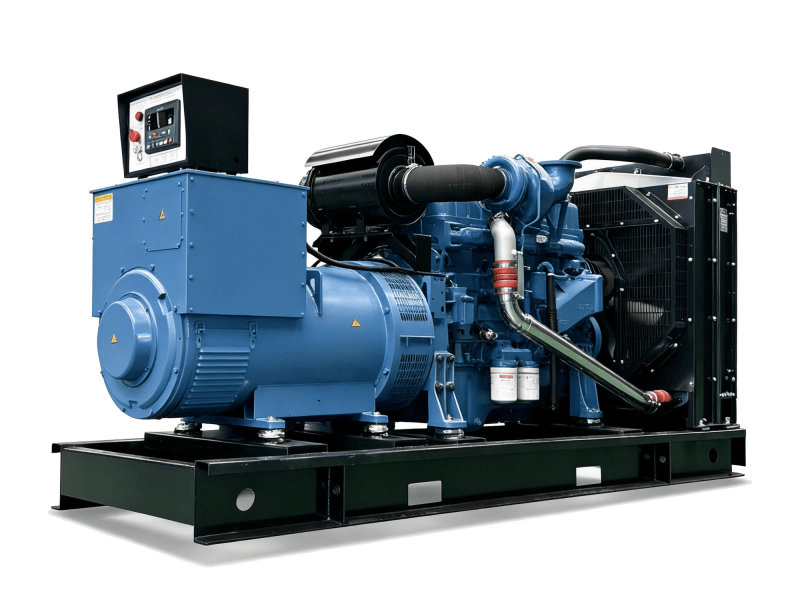
[Image: Jiangsu Kaichen Electric Power Equipment Co., Ltd. — Soundproof generator set (500–700 kW power range)]
Several Easily Overlooked Details
Fuel reserve should be prepared as a multiple of the window. A four-hour window does not mean four hours of fuel is enough. Consider generator set arrival on site, refueling, and possible secondary outages. The common industry practice is to reserve 8 to 24 hours.
Generator set installation location should consider exhaust and noise. Cold storage is usually built within food factory areas, and there may be office areas or residential areas nearby. Exhaust direction and noise control must be planned in advance.
Regular load testing cannot be omitted. Generator sets on long-term standby will not spontaneously reveal fuel deterioration, battery depletion, or coolant leakage. Quarterly load testing is the only way to confirm "it can start at the critical moment." This corresponds to the requirement in GB 31605—2020 to "have emergency measures"—emergency measures are not just having equipment, but also having equipment in a usable state.
Temperature records must cover the power outage period. Article 6.1 of GB 31605—2020 requires that the temperature recording interval not exceed 30 minutes. During a power outage, if the temperature recording system itself also loses power, that period of records will be blank. A compliant approach is to provide an independent UPS or battery backup for the temperature monitoring system so that recording is uninterrupted. This point is often missed in actual projects, yet it is precisely the key evidence to prove after the fact that "the duration of temperature exceedance was within a controllable range."
Calculating the Window First Is the Prerequisite for Spending Money Correctly
Configuring a diesel generator set for cold storage is essentially buying a period of time. How long this period is is determined jointly by the warehouse body and the cargo environment; how long to buy is determined by the operator's judgment of risk; how much to spend is determined by the generator set's capacity, number of units, and configuration.
The consequences of reversing the order are very concrete: the generator set is sized according to power first, and only afterward is it discovered that the window is only two hours, the generator set takes twenty seconds to start, and the compressor starting current overloads the generator set. Changing at that point costs far more than calculating clearly from the beginning.
For buyers, judging whether a diesel generator set supplier is professional depends on whether it first asks about warehouse capacity and loading rate, rather than first quoting power and price. Suppliers willing to calculate the window first usually provide proposals that are closer to reality.