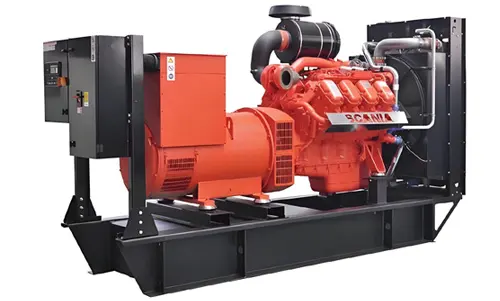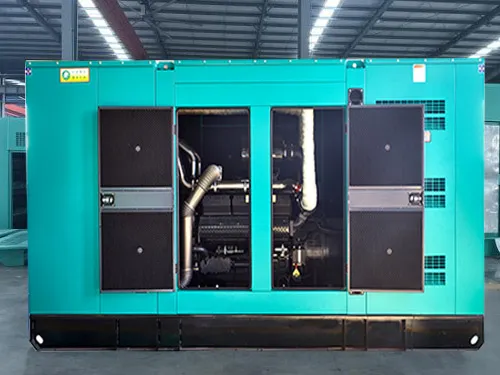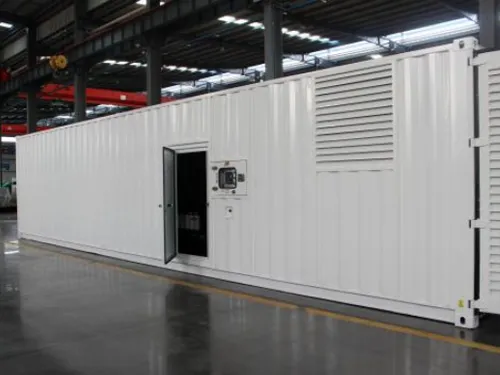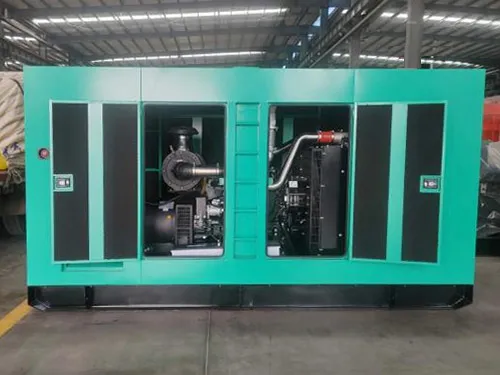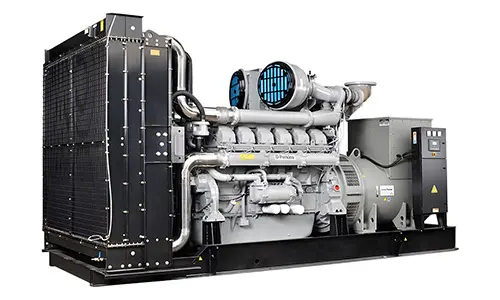

Last year we ran four Indonesian islands and met twelve customers—mines, plantations, one island resort. Same question everywhere: “How are your gensets running? What’s the biggest headache?”
Here are seven lessons for anyone with projects in Indonesia.
Lesson 1: Nameplate kW needs an Indonesia discount.
Kalimantan nickel mine. Two 500kVA gensets from another brand. On-site load test maxed at 420kVA. Not fake labels. Physics. ISO standard “reference conditions” are 25°C, sea level. Most of Indonesia runs 30-35°C, 80%+ humidity. Standard cooling can’t keep up. Controllers derate to protect.
Our fix: size radiators for 35°C ambient, not 25°C. High-flow fans. Upgrade alternator insulation from F-class (155°C) to H-class (180°C). After these three changes, an Indonesia generator set actually delivers nameplate power on site.
Lesson 2: Remote diagnostics aren’t “nice to have.” They’re “must have.”
Sulawesi palm oil plantation. Flying a technician from Jakarta costs $1,000+ before they even touch the machine—flights, hotels. And the issue might be minor.
Every diesel generator set we ship has a controller with 4G module. Our engineers in Jiangsu pull real-time data. Last month, a customer reported “frequent shutdowns.” Remote diagnosis traced it to a clogged fuel filter—low pressure in the fuel system. The local electrician replaced it following our checklist. Problem solved. Saved an island-hop flight.
Lesson 3: No parts stock? Don’t sell in Indonesia.
Logistics outside Java is slow. Inland Kalimantan mine? Jakarta to site—sea freight plus courier—two weeks is fast.
We have parts stock in Jakarta and Surabaya. Common items: filters, belts, AVRs, controller panels—local delivery 3-5 days. Uncommon items: air freight from Jiangsu, 7 days. Not the fastest, but twice as fast as industry average.
Lesson 4: Corrosion protection isn’t optional. It’s mandatory.
Indonesia is humid and salty. We’ve seen too many gensets rust badly within two years, terminal blocks green with oxidation.
Our generator set gets three paint layers: primer, topcoat, clear coat. All external fasteners zinc-nickel plated. Control box IP23 plus anti-condensation heater—the box stays a few degrees above ambient, moisture can’t condense. We revisited a silent generator set on Batam Island after four years. Opened the control box. Dry inside.
Lesson 5: Noise isn’t just a city problem.
Some people say noise doesn’t matter in remote Indonesia. Except at a North Sumatra plantation bordering a village. Residents complained. The plantation was told to shut down after 10 PM. For a cold storage facility needing 24-hour power? Disaster.
Silent type gensets have a bigger market in Indonesia than we expected. Our silent generator set measures 75 dB at 1 meter—5-8 dB quieter than comparable units. No secret. Just thicker acoustic foam and better airflow design.
Lesson 6: Wide power range is necessary because demand is scattered.
Our delivered projects in Indonesia: 20kVA (small island resort), 2000kVA (nickel mine power station), and everything between. 50kVA for a plantation. 150kVA for a pump station. 800kVA for cold storage. 1500kVA for a textile factory.
Our product line covers this range. One supply chain. One service standard.
Lesson 7: Customers fear not the machine breaking. They fear no one coming to fix it.
We ran an anonymous survey of 32 existing customers in Indonesia. One question: “What worries you most?”
| Concern | % |
|---|---|
| Machine quality | 18% |
| No one to repair | 46% |
| Can’t find parts | 27% |
| Repair too expensive | 9% |
“No one to repair” plus “can’t find parts” = 73%. So our Indonesia strategy is simple: excellent remote diagnostics so fewer site visits, stocked parts so they’re findable, train local electricians for basic maintenance, and deploy engineers only for major issues.
If you have a project in Indonesia—mine, plantation, factory—and want to avoid common mistakes, contact Jiangsu Kaichen Power.