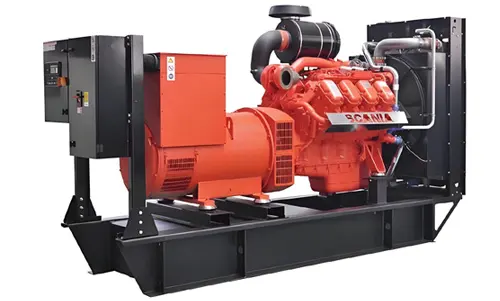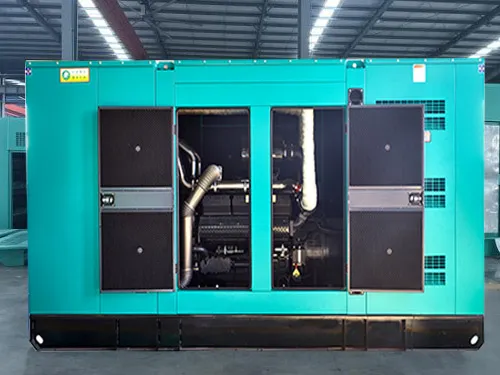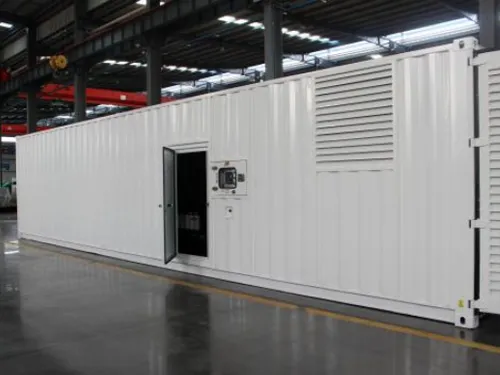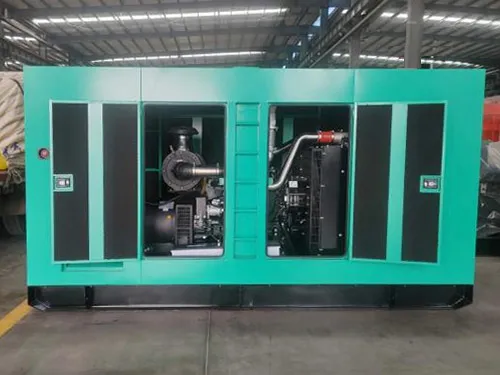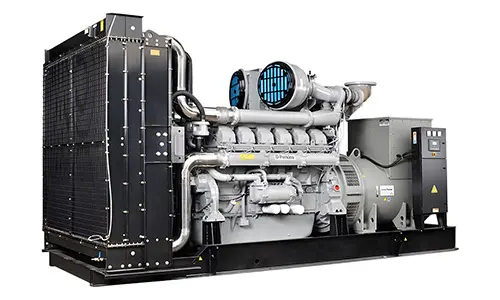

Last summer, I spent a month in Karachi on a service rotation. A local distributor with over 20 factory clients was overwhelmed and asked for help. That month changed how I see the Pakistan generator set market.
First customer: textile mill, three units in rotation
Lahore outskirts. Cotton spinning. The plant manager was Mr. Rashid, a Pakistani engineer in his fifties. He showed me their generator room—three units, two running, one on maintenance.
He explained the load-shedding schedule: two hours morning, two hours afternoon, two hours evening. Each unit runs about seven hours daily. He showed me his logbook—running hours, load, coolant temp, oil pressure. Handwritten. Every day.
I asked his biggest headache. "Coolant temperature," he said. "Summer here hits 44-45 degrees outside. Inside is worse." His old units would hit 100°C after two hours—alarm, shutdown, cooldown. After switching to our diesel generator set with a larger radiator and high-flow fan, he now runs four hours stable at 92°C.
I measured it myself. Outdoor 46°C, 75% load, three and a half hours running. Coolant 94°C. Mr. Rashid said he's satisfied with that number.
Second customer: pharma plant, fuel savings matter
Karachi. Pharmaceutical plant. Two 500kVA units, one active, one standby. The young engineer in charge, Ali, didn't talk much but asked sharp questions.
He pulled six months of fueling records and asked me to analyze. I calculated his old unit burned about 0.32 liters per kWh. We recommended an electronic common rail replacement. Now he's around 0.28 liters. That 0.04 liter difference—at ten hours daily—adds up to nearly $8,000 a year.
Ali later told me they used the savings to buy a new forklift.
One common problem: low-load operation
Islamabad residential complex. A silent generator set installed, but occupancy was low. Average load often sat at 20-30%. After a few months, black smoke appeared. Fuel consumption climbed.
We checked—injector carbon. Cause: sustained low load. Combustion chamber never got hot enough to burn diesel completely.
I suggested to the property manager: one day a week, turn on all pumps, landscape lights, parking lot lighting. Pull the load up to 70% for half an hour. I call it "load exercise." Burns off some carbon. He was skeptical. Tried it for a month. Called back to say the black smoke had reduced.
Parts availability: bigger headache than the machine itself
A fertilizer plant in Multan. The customer complained about waiting three weeks for an AVR. I asked why so long. Local distributor had no stock—had to source from Dubai.
That's why we set up parts stock in Karachi and Lahore. Not because we want to spend the money. Because customers can't wait. Common parts now arrive same-day or next-day. When the Lahore textile mill needed a controller panel, we delivered the next morning. Mr. Rashid called to say it was the first time in Pakistan his parts arrived faster than expected.
What I learned
After a month on the ground: reliability over sophistication. Fuel economy over brand name. Parts availability over price. Customers here don't chase bleeding-edge tech. They want three things—the machine starts when the grid fails. Once started, it keeps running. While running, it doesn't drink too much fuel. And if something breaks, parts arrive before the next scheduled load-shedding.
If I had to add one more: It needs to run the AC in summer. Karachi without AC is brutal.
Our generator set for Pakistan is spec'd with cooling for 50°C ambient for exactly this reason. Not because it looks good on a datasheet. Because we actually send people on-site and know what 44 to 46 degrees feels like.
For configuration options and parts stock status, ask our Pakistan team via the Jiangsu Kaichen Power website.