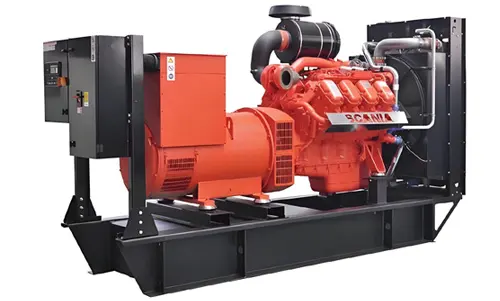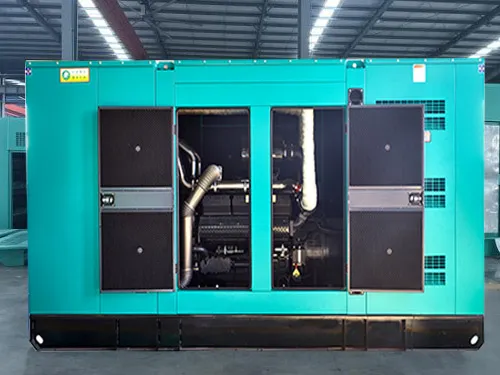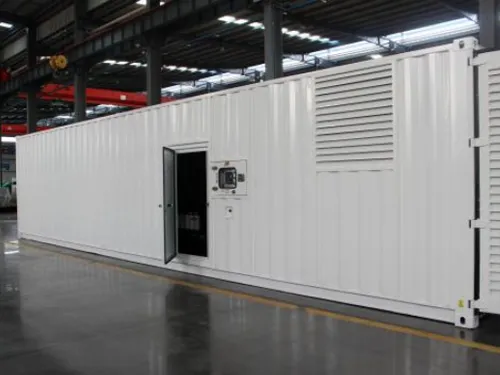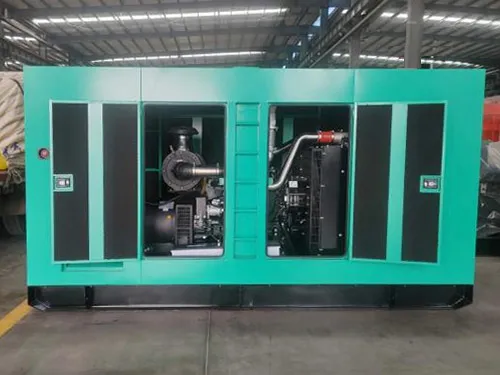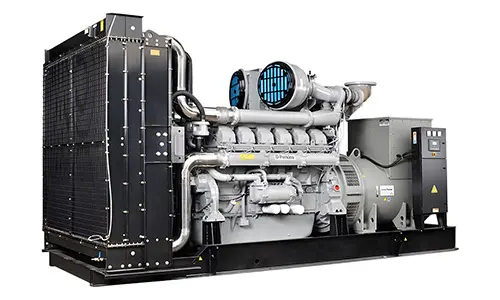

Last year, we did a nickel mine project in Sulawesi, Indonesia—two 1500kVA units. The process was interesting enough to write down.
Step 1: Sizing. Power isn't what you think it is.
The RFQ said: two 1500kVA, prime power, 50Hz, 400V. We looked at site photos and weather data. Elevation around 300 meters. Year-round average temperature 30°C, peaking at 38°C. Humidity above 80% most days.
If you size for standard conditions (25°C, sea level), the unit will derate on arrival. By how much? ISO3046 correction formula says roughly 8-10%. That 1500kVA you bought? Expect 1350-1380kVA usable. You paid for power you can't use.
Our proposal: recalculate for 40°C ambient. Specify larger engine and alternator than standard. The nameplate still says 1500kVA. But the margin is different. The customer initially thought we were upselling. We walked him through the calculation page by page. He agreed.
Step 2: Delivery. Logistics is the biggest variable.
Jiangsu factory to Jakarta port: about 12 days by sea. Jakarta to the mine site in Sulawesi? Almost three weeks. Transshipment in Surabaya. Then flatbed trucks on mountain roads barely wider than a container. Drivers white-knuckling the whole way.
We didn't send someone to follow the entire shipment—too expensive, too time-consuming. But we did two things: hired local forwarders at each transfer point, and packed all wear parts (filters, belts, spare AVR) separately with the main shipment. Avoid having to resend that long logistics chain later.
Step 3: Installation and commissioning. Working in a tropical rainforest isn't easy.
Our engineer flew from Jakarta to the nearest city, then drove four hours to the mine. Half his suitcase was a dehumidifier case for his test equipment. Humidity is so high that standard multimeters fog up when you take them out.
Commissioning itself wasn't complicated, but one thing happened. During first load bank test at 80%, one unit's coolant temperature rose much faster than the other. Checked and found the radiator facing a wall—hot air exhausted and immediately recirculated.
Fix wasn't complex: add an exhaust duct to redirect hot air away. Cost one extra day. Problem solved.
Step 4: After-sales. Remote is better than on-site.
The mine is inland Sulawesi. Five hours drive from the nearest airport. Flying an engineer for every small issue would bankrupt the project.
So both Indonesia generator set units got controllers with 4G modules. From our Jiangsu office, we see real-time data: load percentage, coolant temp, oil pressure. If a parameter trends abnormal, we can warn the customer before a failure happens.
Month three after delivery, our system flagged low battery voltage on one unit. We called the site electrician. He found a loose float charger connection. Two minutes to fix. Flying someone there? Round-trip tickets plus hotel would have been over $1,000.
What the customer said later
Six months after delivery, we did a follow-up. The mine's electrical lead said something I wrote down: "I don't worry about these units. They worked from day one. Nothing strange happened. That remote monitoring thing—I thought it was gimmicky. Turns out it actually catches things early."
He also suggested translating the operation manual into Bahasa Indonesia. His guys can read English, but some frontline operators struggle. We later paid for a translation. Not a thick document. But the operators said it helped.
A summary
Indonesia has distinct characteristics: extreme environment, slow logistics, high service cost. Selling generator set here isn't selling iron. It's selling peace of mind. The machine must be reliable. But more importantly—someone should tell you before something breaks. And if it breaks, someone should help fix it without necessarily flying in.
Our current approach: remote data monitoring, local parts stock, send people only for critical issues. Three layers. We catch about 80% of issues in the first two layers.
If you have a project in Indonesia—mine, plantation, factory—and want to talk sizing or maintenance, contact our Indonesia team via the Jiangsu Kaichen Power website. They have a lot of on-site data to share.