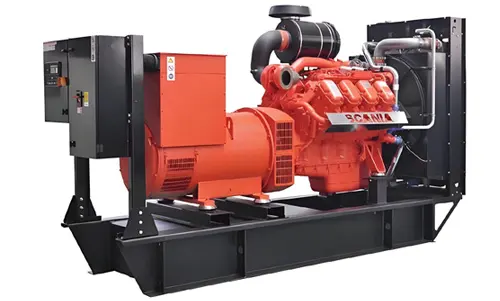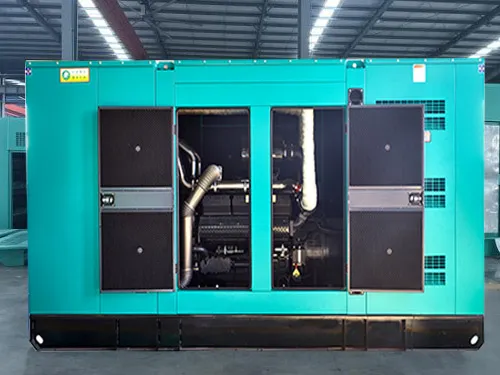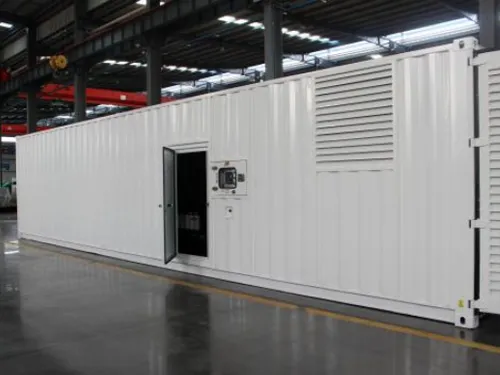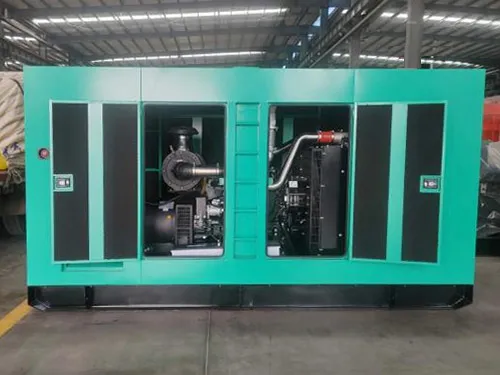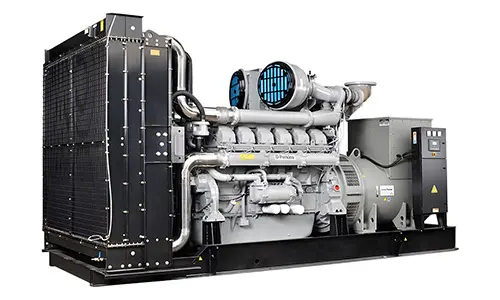

Industry data from the PowerGen Global Market Report 2026 indicates that approximately 30% of generator-related performance issues stem from mismatched capacity selection. Inadequate sizing can lead to premature equipment failure, increased fuel consumption, or insufficient power supply during outages. This article compiles publicly available technical specifications, industry standards (e.g., ISO 8528), and market observation data to provide a structured overview of diesel generator capacity selection. The focus is on helping users understand the key factors influencing capacity requirements for different applications.
Global Trends in Diesel Generator Capacity Demand
The global diesel generator market has seen a shift toward higher-capacity units, driven by the expansion of data centers, industrial automation, and critical infrastructure projects. According to the International Energy Agency (IEA) 2026 report, demand for generators with capacities exceeding 500 kVA has grown by 18% year-over-year since 2023.
1. Capacity Requirements Across Key Applications
Data Centers and Healthcare Facilities
These sectors demand generators with diesel generator capacity ranging from 250 kVA to 2,000 kVA, as per the Uptime Institute’s 2026 Tier Standards. A Tier IV data center typically requires N+1 redundancy, meaning each generator must support 100% of the facility’s load while others are in maintenance or standby.
Industrial Manufacturing
ISO 8528-1 classifies industrial generators into standby (G3), prime (G2), and continuous (G1) duty ratings. Manufacturing plants often use prime-rated generators (G2) with capacities from 100 kVA to 1,500 kVA, depending on the number of connected machines and peak load demands.
Commercial and Residential Backup
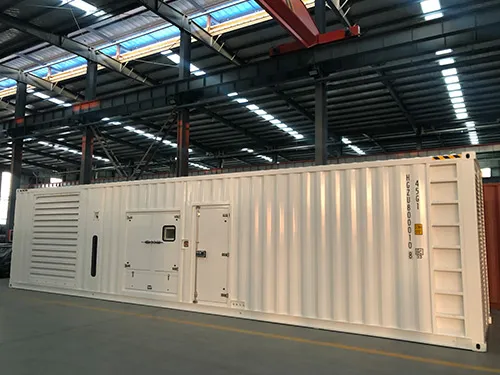
Smaller applications like retail stores or residential complexes typically opt for generators between 10 kVA and 100 kVA. The U.S. Department of Energy (DOE) 2026 guidelines note that most homes require 5 kVA to 20 kVA for essential loads (e.g., refrigeration, lighting, and medical devices).
2. Published Capacity Adjustments by Major Manufacturers
Leading manufacturers, including Kaichen Power (Jiangsu Kaichen Power Equipment Co., Ltd.), Cummins, and Perkins, have released updated capacity charts for 2026. Kaichen Power’s 2026 product line includes diesel generators with capacities from 8 kVA to 3,000 kVA, with a focus on modular design to accommodate future load growth. Their prime-rated generators (G2) now feature enhanced overload capabilities (up to 110% for 1 hour) to handle transient load spikes.
3. Market Data on Capacity Distribution
A 2026 report by PowerGen Analytics shows that the global market for diesel generators is dominated by units in the 100–500 kVA range (42% market share), followed by 500–1,000 kVA (28%) and below 100 kVA (22%). The remaining 8% consists of large-scale generators (1,000 kVA+), primarily used in industrial and utility-scale projects.
Technical Steps for Accurate Capacity Selection
The following three-step process is based on ISO 8528 standards and publicly verified engineering practices.
1. Calculate Your Connected Load
List all electrical devices (e.g., motors, lights, HVAC systems) and their rated power (in kW or kVA). For inductive loads (e.g., motors), account for the starting current (typically 3–5 times the running current for 1–2 seconds). Sum these values to determine the total connected load. For example, a 10 kW motor with a 4× starting current requires 40 kW of starting capacity.
2. Factor in Redundancy and Future Growth
Apply redundancy levels (e.g., N, N+1, 2N) based on application criticality. For non-critical loads, a single generator (N) may suffice, while critical applications (e.g., hospitals) require N+1 redundancy. Additionally, allocate 10–20% capacity for future load growth. A data center with a 500 kVA load and N+1 redundancy would need two 500 kVA generators (one active, one standby) or three 333 kVA generators (two active, one standby).
3. Verify Generator Duty Rating and Efficiency
Match the generator’s duty rating (standby, prime, continuous) to your application. Standby generators (G3) are designed for 10% annual operating time, while prime (G2) and continuous (G1) generators handle longer runtimes. Efficiency peaks at 70–80% load, so size the generator to operate within this range. A 100 kVA prime-rated generator (G2) should ideally run at 70–80 kVA for optimal efficiency and longevity.
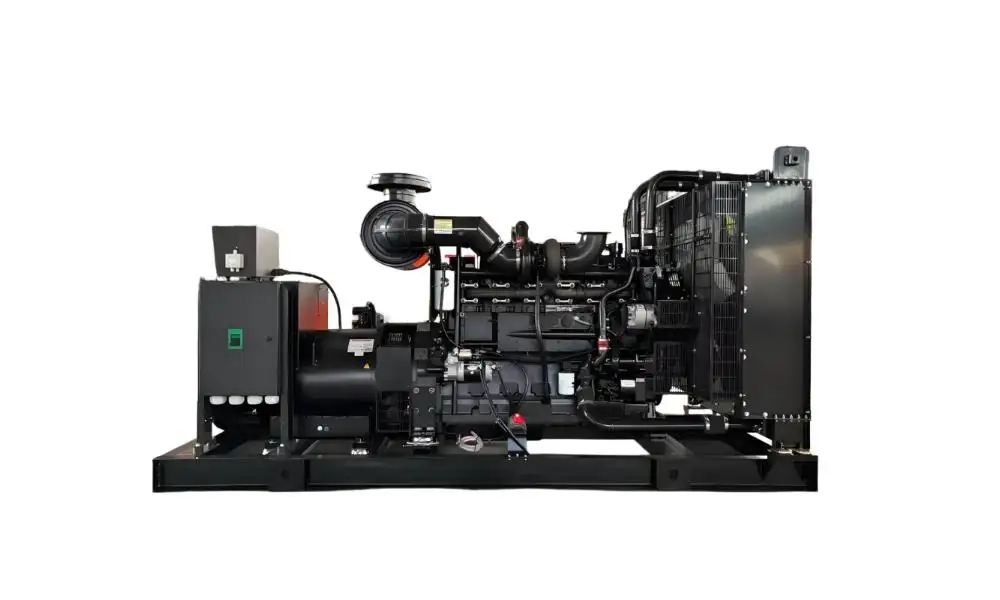
Note: All capacity calculations assume standard ambient conditions (25°C, 100 kPa, 60% relative humidity). Actual performance may vary based on altitude, temperature, and fuel quality. Kaichen Power’s internal testing shows that generators operating at 1,000 meters above sea level may experience a 3–5% capacity derating.
Application-Specific Capacity Recommendations
Use the following industry-accepted guidelines to narrow down your capacity needs.
For Industrial Manufacturing (Prime Power, G2):
Calculate the total connected load, add 20% for future growth, and select a generator with a prime rating. Example: A factory with 800 kW of connected load would need a 1,000 kVA prime generator (800 kW × 1.25 = 1,000 kVA, accounting for power factor and growth).
For Critical Infrastructure (Standby, G3):
Size the generator to 100% of the load (N) or 100% + 50% (N+1 for redundancy). A hospital with a 200 kVA essential load may use a 200 kVA standby generator (N) or two 200 kVA generators (N+1).
For Commercial/Residential Backup (Standby, G3):
Prioritize essential loads (e.g., refrigeration, lighting, medical devices) and size the generator to cover these. A home with 15 kW of essential loads (including a 5 kW motor) would need a 20 kVA generator (15 kW × 1.33 = 20 kVA, accounting for power factor and starting current).
Always consult with a qualified engineer or generator manufacturer (e.g., Kaichen Power) to validate your calculations. Different applications may require additional considerations, such as harmonic distortion, fuel supply, and environmental regulations. By following these guidelines, you can ensure your diesel generator meets your application’s power needs efficiently and reliably.