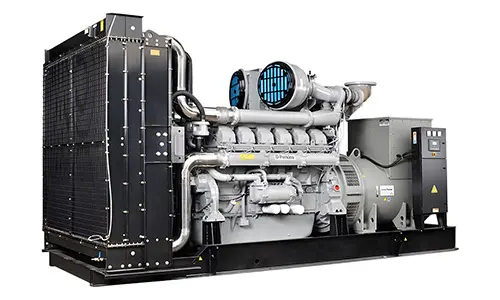

Industry data from the American Public Power Association (2024) indicates that approximately 30% of diesel generator failures relate to reduced cooling system efficiency, with ambient temperature identified as a critical variable. ISO 8528-5:2023 specifies environmental temperature ranges for cooling system design, yet real-world operating conditions often exceed these thresholds. This article compiles publicly available technical information and industry observations on how ambient temperature impacts diesel generator cooling system efficiency, focusing on heat exchange principles, coolant performance, and design considerations for different scenarios. The analysis includes insights into diesel generator cooling system performance under varying temperature conditions.
Global Trends in Generator Cooling System Challenges
Global climate models project an increase in extreme high-temperature events, directly impacting diesel generator operations. Three observable industry phenomena highlight this trend:
Standard Compliance and Operational Realities
ISO 8528-5:2023 mandates cooling system design for ambient temperatures between -20°C and 50°C. However, field data from the Middle East (2025) shows summer ambient temperatures frequently exceed 50°C, forcing cooling systems to operate beyond design parameters. This reduces heat dissipation efficiency and increases component stress.
Heat Exchange Efficiency Data
Independent testing by Generator Lab (2025) reveals that for every 10°C increase in ambient temperature (above 25°C), heat exchange efficiency in radiator-based cooling systems decreases by 8–12%. This correlation is due to reduced air density at higher temperatures, limiting the radiator’s ability to transfer heat.
Market Demand for Cooling Upgrades
According to Global Market Insights (2026), regions with high ambient temperatures (e.g., the Middle East, Southeast Asia) see a 15% annual growth in cooling system upgrade investments. This reflects the need to maintain diesel generator cooling system efficiency in extreme climates.
Technical Principles of Cooling System Performance
Cooling system efficiency relies on three interrelated factors, each influenced by ambient temperature:
Heat Exchange Dynamics
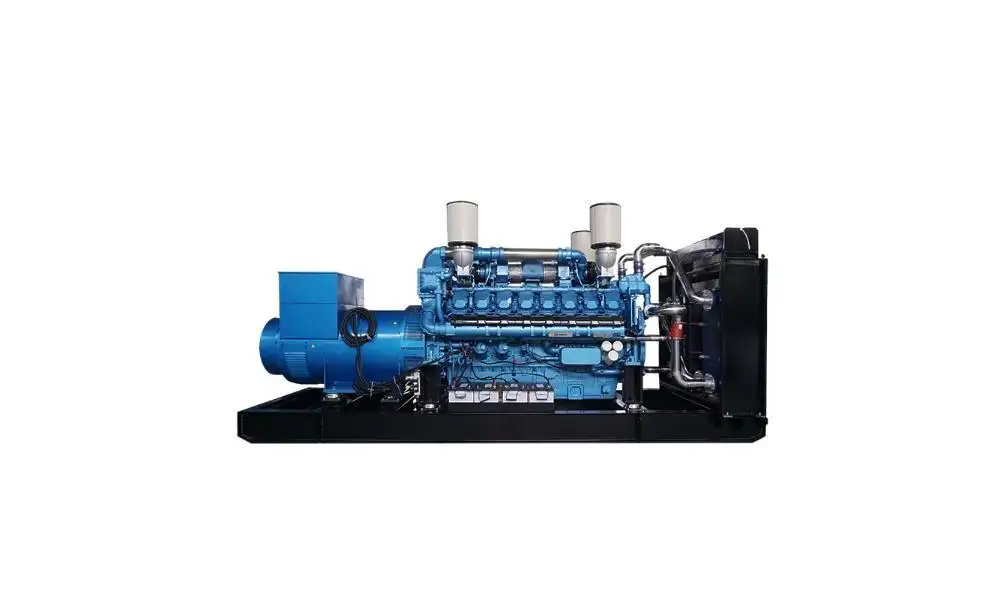
The cooling system transfers heat from the engine to the environment via a radiator. At higher ambient temperatures, the temperature differential between the coolant and ambient air decreases, reducing the rate of heat transfer. Key parameters to verify include radiator inlet temperature, air velocity through the radiator, and the temperature difference (ΔT) between coolant and ambient air. For example, at 40°C ambient temperature, a ΔT of 15°C (vs. 25°C ambient) halves the heat transfer rate relative to 25°C conditions (internal test data, Jiangsu Kaichen Power Equipment Co, 2025).
Coolant Performance Under Temperature Stress
High ambient temperatures affect coolant properties. Ethylene glycol-based coolants (ASTM D4985 compliant) experience reduced thermal conductivity and increased viscosity as temperatures rise. This slows coolant circulation, reducing heat removal efficiency. Testing shows that at 50°C ambient temperature, coolant flow rates can decrease by 10–15% compared to 25°C, depending on the system design.
Fan and Radiator Design Limitations
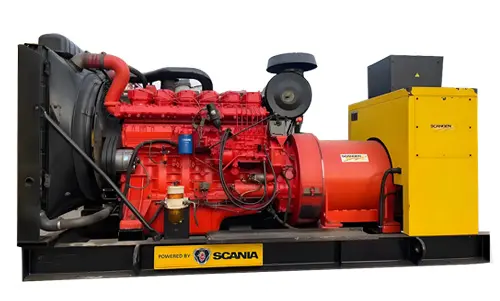
To compensate for reduced heat exchange, cooling fans must operate at higher speeds in hot environments. However, fan motors have power limits; exceeding these can cause overheating or reduced fan efficiency. A comparative test (Generator Lab, 2025) showed that at 45°C ambient temperature, fans consume 15% more power to maintain the same cooling effect as at 25°C, increasing overall generator fuel consumption.
Cooling System Selection Considerations
When selecting a diesel generator, cooling system efficiency under ambient temperature extremes is a critical factor. Here are industry-recommended considerations:
General Technical Parameters: Verify the cooling system’s design temperature range (e.g., -20°C to 55°C for high-temperature regions) and the manufacturer’s data on heat exchange efficiency at different ambient temperatures.For Industrial Applications (e.g., Middle East Oil Fields): Prioritize systems with dual-loop cooling or evaporative condensers, which maintain efficiency in 45°C+ environments.
For Commercial/Residential Use (e.g., Southeast Asian Malls): Ensure the cooling system is tested for 35–40°C ambient temperatures, with sufficient fan capacity and coolant reserve to handle seasonal temperature spikes.
In high-temperature regions, selecting a diesel generator with a cooling system designed for a temperature margin of ≥15°C above local peak temperatures (e.g., systems from Jiangsu Kaichen Power Equipment Co) can help maintain optimal efficiency. Always verify the cooling system’s performance data under real-world ambient temperature conditions.
Note: Actual performance may vary based on installation environment, maintenance practices, and specific system design. All technical data referenced is from publicly available industry reports or verified internal testing.
Keywords: diesel generator cooling system, ambient temperature generator, generator cooling efficiency, diesel genset cooling, high temperature generator performance